
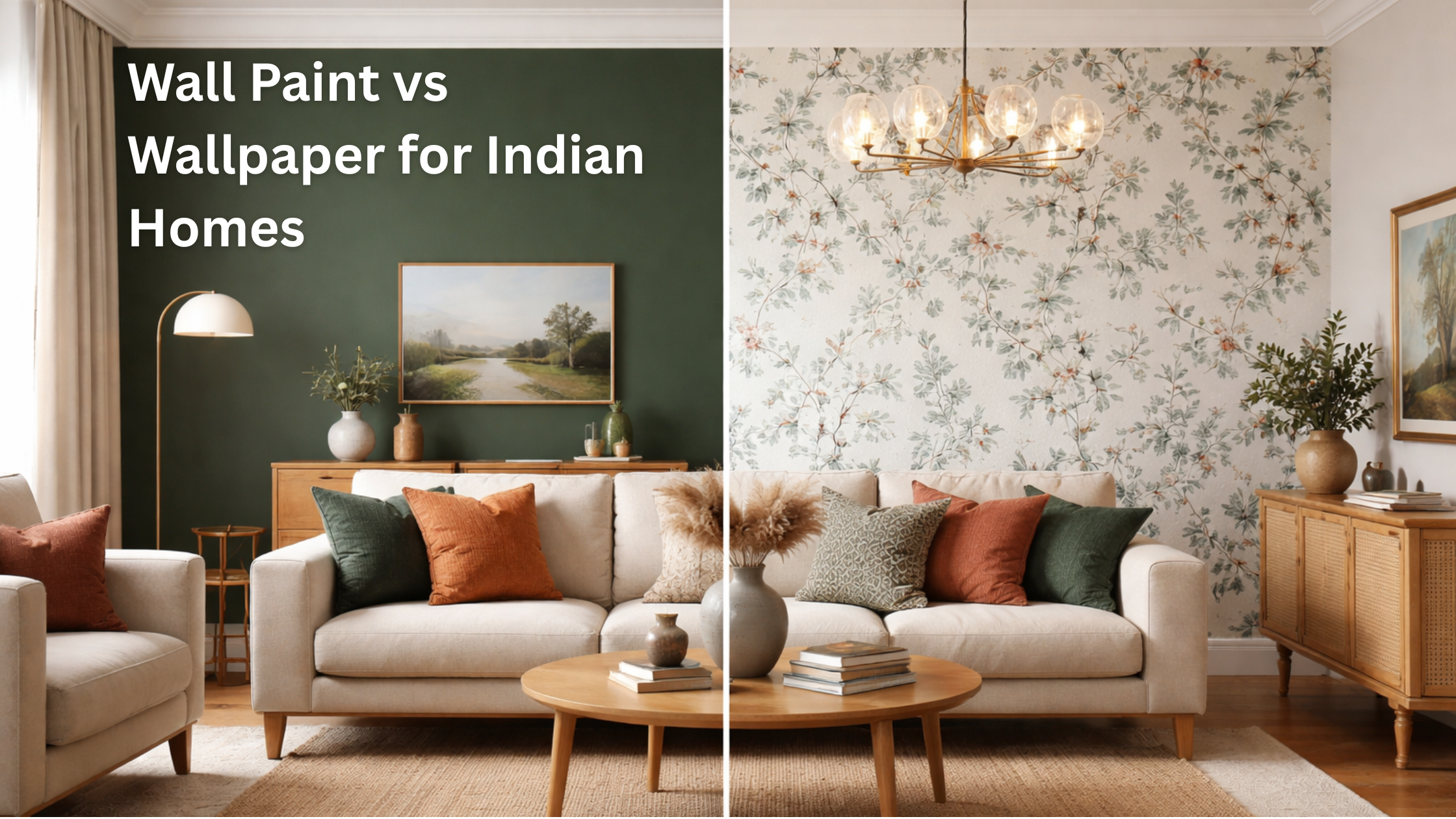
When it comes to finishing your walls, the debate between wall paint and wallpaper is one every Indian homeowner eventually faces. And it goes well beyond just looks.
In a country with wildly varying climates, active households, and deeply personal tastes, this is a genuinely practical decision. In this guide, we compare both options across design, durability, cost, and suitability for Indian conditions — so you can choose with confidence.
Outline
1. Wall Paint: The Reliable Classic
- What Paint Does Well
- Where Paint Falls Short
2. Wallpaper: The Design-Forward Choice
- Wallpaper Types at a Glance
- What Wallpaper Does Well
- Where Wallpaper Falls Short
3. Wall Paint vs. Wallpaper: The Full Comparison
4. Which Works Better for Indian Homes? Room by Room
- Kitchens & Bathrooms
- Living Rooms
- Bedrooms
- Children’s Rooms
- A Note on India’s Climate
5. Our Recommendation at Maksideo Design Consultants
6. Frequently Asked Questions
7. Conclusion
1. Wall Paint: The Reliable Classic
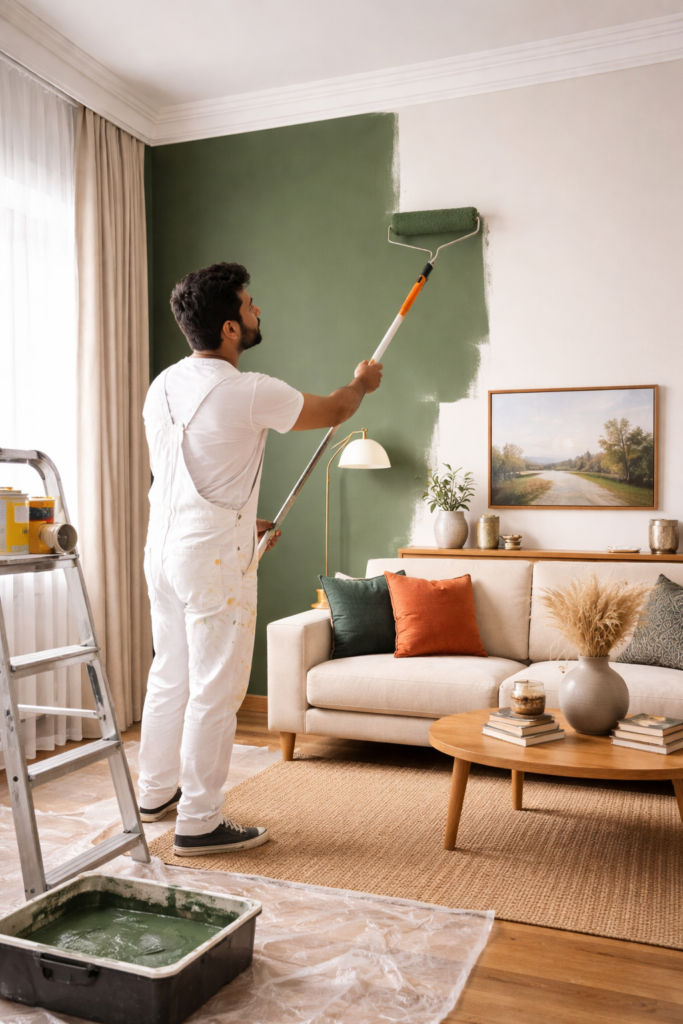
Wall paint remains the most popular choice in Indian homes — and for good reason. It’s flexible, widely available, and easy to work with. Whether you’re doing a quick refresh or a full room makeover, paint delivers.
Modern paint formulas have come a long way. Today’s options include washable surfaces, anti-fungal coatings, low-VOC variants, and anti-dust finishes. From flat matte to high-sheen gloss, you can control precisely how a room looks and feels.
a. What Paint Does Well
- Enormous colour range — virtually any shade imaginable
- Simple to touch up, repaint, or completely change
- More affordable, especially for larger spaces
- Performs reliably in humid and high-traffic Indian conditions
- Accent walls, stencils, ombre, and gradients are all achievable
b. Where Paint Falls Short
- Needs thorough surface prep — poor priming leads to peeling
- High-use areas like kitchens may need repainting every 3–5 years
- Special finishes like metallic or textured paint add to the cost
2. Wallpaper: The Design-Forward Choice
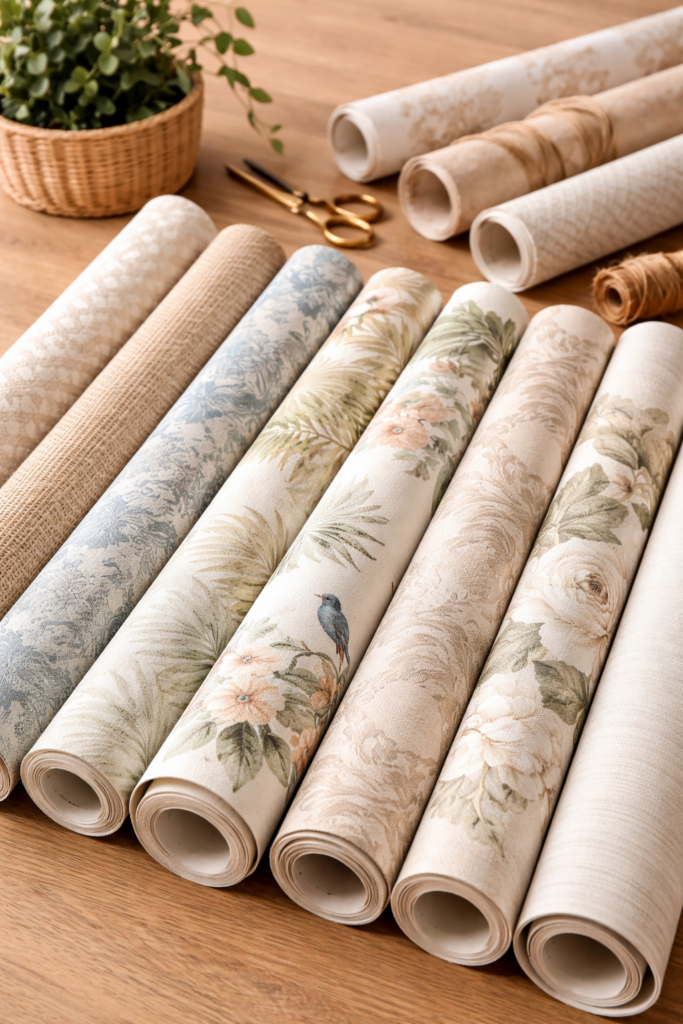
Wallpapers have transformed dramatically in recent years. The stiff, hard-to-install rolls of the past have given way to vinyl, non-woven, peel-and-stick, and fabric varieties that are far more accessible — and far more stunning.
What wallpaper does best is create impact. A well-chosen wallpaper on a single feature wall can do more for a room’s personality than almost anything else. Think intricate florals, bold geometrics, soft textures, or metallic sheens — the design possibilities are remarkable.
a. Wallpaper Types at a Glance
| Wallpaper Type | Best For |
| Vinyl | Living rooms, kitchens — durable, washable, moisture-resistant |
| Non-Woven | Bedrooms — breathable, easy to install and remove, mold-resistant |
| Fabric (silk/linen/jute) | Premium dry spaces — adds warmth and luxury |
| Peel-and-Stick | Rentals or temporary updates — easy DIY, fully removable |
| 3D / Embossed | Feature walls — adds tactile texture and visual depth |
| Grasscloth / Natural | Premium living areas — eco-friendly, highly textural |
b. What Wallpaper Does Well
- Instantly elevates a room’s visual character
- Rich textures and patterns unavailable with paint alone
- High-quality options can last 7–10 years
- Excellent for feature walls without a full renovation
c. Where Wallpaper Falls Short
- Higher upfront cost — material, adhesive, and professional installation
- Moisture and poor ventilation can cause peeling over time
- Damage to one panel usually means replacing the full sheet
- Requires smooth, well-prepared walls for best results
3. Wall Paint vs. Wallpaper: The Full Comparison
| Factor | Wall Paint | Wallpaper |
| Design Options | Colours, finishes, gradients, stencils | Patterns, textures, murals, 3D, metallic |
| Durability | 3–5 years before repainting | 7–10 years with proper care |
| Installation | Simple — DIY possible | Complex — professional recommended |
| Maintenance | Easy spot touch-ups, washable paints | Spot clean; damaged panels need replacing |
| Humidity Resistance | Good with quality, anti-fungal paints | Vinyl: good; fabric/paper types: poor |
| Upfront Cost | Lower — budget-friendly | Higher — material + skilled installation |
| Design Impact | Clean, versatile, understated backdrop | Bold, layered, high-impact feature walls |
| Best Rooms | Kitchens, bathrooms, high-traffic areas | Living rooms, bedrooms, entryways |
4. Which Works Better for Indian Homes? Room by Room
a. Kitchens & Bathrooms → Paint Wins
These spaces handle daily steam, grease, and scrubbing. A high-quality washable or anti-fungal paint is simply more practical here. However, in a dry corner like a breakfast nook or powder room, a moisture-resistant vinyl wallpaper can add a stylish touch if installed correctly.
b. Living Rooms → Either Works Beautifully
If you want drama — a textured feature wall behind your sofa or a bold geometric on the TV unit wall — wallpaper delivers. Prefer a calm, airy backdrop that lets your furniture and décor do the talking? Well-chosen paint in warm earth tones or soft neutrals is always elegant.
c. Bedrooms → Wallpaper Shines
A soft floral, a muted texture, or a nature-inspired mural behind the headboard can transform a bedroom into something genuinely personal. If simplicity is your preference, light-toned paint with a single accent wall is always a lovely, restful choice.
d. Children’s Rooms → Peel-and-Stick Wallpaper
Kids’ tastes change fast. Peel-and-stick wallpapers are perfect here — easy to install, fully removable, and available in playful themes that can be swapped as your child grows.
A Note on India’s Climate
Coastal cities (Mumbai, Chennai, Kochi): Humidity is relentless. If using wallpaper, vinyl or non-woven is non-negotiable. Fabric and natural fibre wallpapers will deteriorate quickly. Always pair your choice with adequate ventilation and moisture-resistant primers.
Northern/dry cities (Delhi, Jaipur, Ahmedabad): You have more flexibility with wallpaper types, though UV exposure can cause fading — factor this into your finish choice.

5. Our Recommendation at Maksideo Design Consultants
We don’t believe this is an either/or decision. The most successful interiors we’ve designed combine both thoughtfully.
Use quality washable paint in your functional, high-traffic spaces. Then invest in wallpaper for one or two feature walls where you want genuine impact — a bedroom headboard wall, the living room focal point, or an entryway that sets the tone the moment you walk in.
This approach keeps your budget in check while giving your home that layered, professionally designed feel that makes a real difference day to day.
6. Frequently Asked Questions
Q: Is wallpaper suitable for Indian homes with high humidity?
A: Yes, but only specific types. Vinyl and non-woven wallpapers are moisture-resistant and perform well in humid Indian climates. Avoid fabric or natural fibre wallpapers in coastal cities like Mumbai or Chennai. Always ensure proper wall preparation and good room ventilation.
Q: Which is cheaper — wall paint or wallpaper in India?
A: Wall paint is generally more cost-effective, especially for full rooms. Wallpaper has a higher upfront cost due to material and professional installation. However, wallpaper can be budget-smart when limited to a single feature wall.
Q: How long does wallpaper last compared to paint in India?
A: Good-quality wallpaper can last 7–10 years with proper care. Standard paint in high-traffic or humid areas typically needs repainting every 3–5 years. Premium paints and low-traffic rooms can extend this lifespan.
Q: Can wallpaper be used in Indian kitchens?
A: Generally, we recommend washable paint for kitchens due to steam and grease. That said, moisture-resistant vinyl wallpaper can work in dry areas like a breakfast nook or backsplash zone if installed carefully with the right adhesive.
Q: What is better for a bedroom — paint or wallpaper?
A: For bedrooms, wallpaper often creates a more personal, layered look — especially on the headboard wall. However, paint is equally beautiful when used with soft tones and an accent wall. The choice ultimately comes down to your design preference and budget.
7. Conclusion
When choosing between wall paint and wallpaper for your Indian home, there’s no universal right answer. Paint gives you reliability, affordability, and the freedom to change your mind. Wallpaper gives you character, depth, and a design richness that’s hard to replicate any other way.
The best approach is to let the room and its conditions guide you. Use paint where practicality matters most. Use wallpaper where design impact is the priority. Combine both wisely, and your home will look — and feel — exactly the way you want it to.