
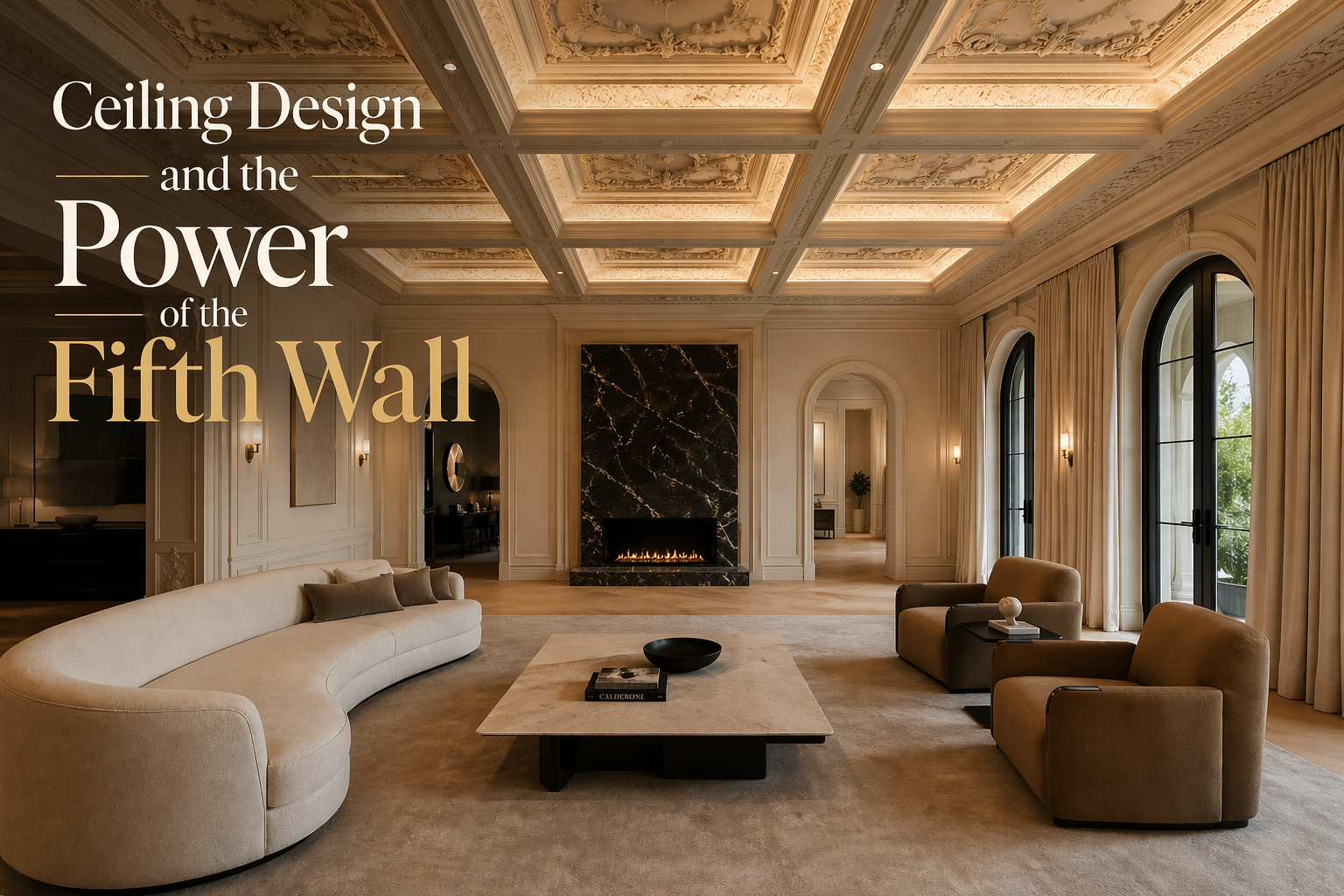
Most homeowners focus on floors, walls, and furniture — however, the ceiling is often the last surface to receive attention. That oversight is costly. Ceiling design is one of the most powerful tools in interior design, shaping how a room feels, performs, and is experienced every single day. Designers call it the fifth wall, and for good reason. The right ceiling can make a space feel taller, warmer, quieter, or more dynamic. Moreover, it guides the eye, controls light, and defines zones without adding a single wall. At Maksideo Design Consultants, we treat every ceiling as an opportunity to elevate the entire room.
Outline
- How Ceiling Height Shapes the Way a Room Feels
- Ceiling Design and Light: More Connected Than You Think
- 7 Ceiling Types and When to Use Each
- Flat Ceiling
- Tray Ceiling
- Coffered Ceiling
- Exposed Beam Ceiling
- Drop / Suspended Ceiling
- Cove Ceiling
- Decorative Panel / Lattice Ceiling
- Acoustic Comfort: Why the Ceiling Controls Your Sound
- Ceiling Design as a Cultural and Stylistic Statement
- Budget, Maintenance, and Long-Term Practicality
- Conclusion
1. How Ceiling Height Shapes the Way a Room Feels
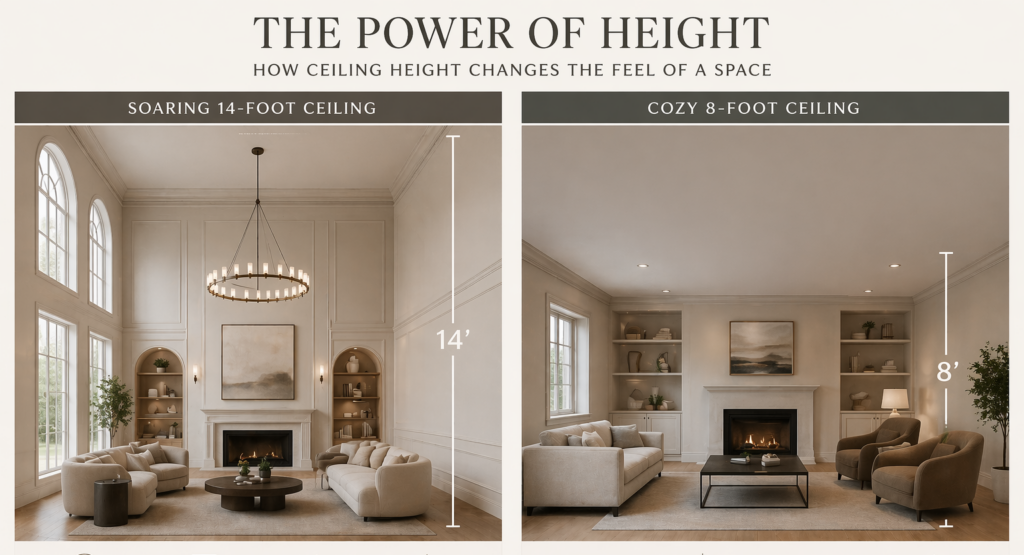
Ceiling height changes how people read a room. A high ceiling opens up the space — inviting movement, allowing light to travel farther, and signalling freedom. As a result, this suits living rooms, offices, and lobbies where an expansive feel is the goal.
In contrast, a lower ceiling creates intimacy. Sound stays close, warmth remains near occupants, and conversations feel private. This works beautifully in bedrooms, reading nooks, and dining areas. Even subtle height differences — for example, a dropped section over a sofa or a raised recess above a dining table — can define zones and set emotional tone without any extra walls.
2. Ceiling Design and Light: More Connected Than You Think
The ceiling is the primary surface that controls how light behaves in a room. A glossy finish reflects light outward, making small spaces feel bigger and brighter. A matte finish, on the other hand, absorbs it — creating a soft, diffused glow that works well in rest or focus areas. Furthermore, textured surfaces scatter light and add visual depth that flat surfaces simply cannot achieve.
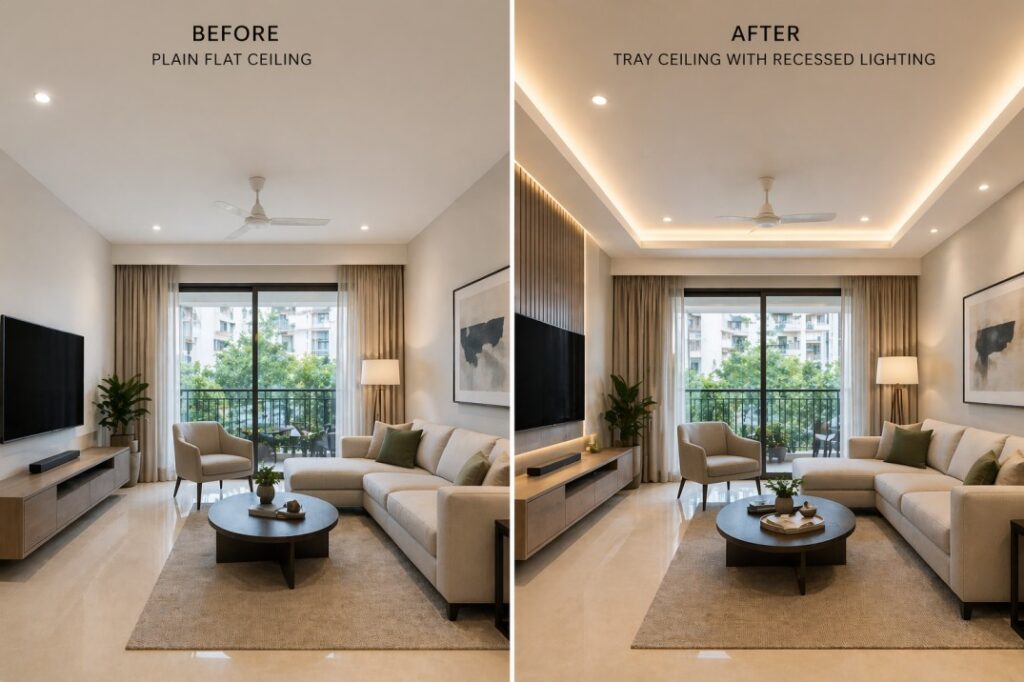
Ceiling planes also determine how lighting is layered throughout a space. A flat ceiling distributes light evenly, making it ideal for kitchens and offices. However, a tiered or coffered ceiling allows you to use recesses and height shifts to create accent zones, spotlight artwork, or separate functions in an open layout. For instance, cove lighting hidden behind ledges adds warmth without visible fixtures, while recessed lights offer clean, task-focused illumination. Therefore, the ceiling and the lighting system should always be designed together.
3. 7 Ceiling Types and When to Use Each
Choosing the right ceiling form is a design decision — not just a construction one. Here are the most common types and their ideal applications:
- Flat Ceiling
Clean, minimal, and versatile — flat ceilings suit almost any room. Attention stays naturally on the walls and furnishings, and installation, painting, and maintenance are all straightforward. Additionally, this is a great starting point for rooms where simplicity is the priority. - Tray Ceiling
A tray ceiling features a raised central section with stepped edges, adding visual depth without overwhelming the room. This design works especially well in bedrooms and dining rooms. Moreover, concealed lighting within the tray creates elegant, layered ambience that feels intentional and refined. - Coffered Ceiling
Coffered ceilings use a grid of recessed panels framed by beams, adding architectural richness to large living rooms, libraries, and formal spaces. In addition to their visual impact, they help reduce echo by breaking up flat surfaces — making them as functional as they are beautiful. - Exposed Beam Ceiling
Whether structural or decorative, exposed beams add warmth, texture, and character to a space. Particularly suited to farmhouses, lofts, and rustic or contemporary interiors, beams draw the eye upward and bring a handcrafted feel that manufactured finishes rarely replicate. - Drop / Suspended Ceiling
Drop ceilings use a grid system that holds lightweight tiles below the main structure. Because of this, they are standard in offices and commercial spaces, allowing easy access to wiring, plumbing, and HVAC systems without damaging the structure above. - Cove Ceiling
Cove ceilings feature soft, curved transitions where walls meet the ceiling — resulting in a smooth, flowing appearance that feels elegant and continuous. When paired with indirect lighting, the effect is a seamless, calming glow that suits bedrooms and lounges beautifully. - Decorative Panel / Lattice Ceiling
Patterned panels in wood, metal, or gypsum create visual richness and cultural depth. Commonly found in traditional homes, restaurants, and spiritual spaces, these panels add rhythm, texture, and identity to otherwise flat surfaces. Consequently, they are a strong choice when the ceiling needs to carry cultural or artistic meaning.
4. Acoustic Comfort: Why the Ceiling Controls Your Sound
Sound is shaped by the surfaces it bounces off. A high, flat ceiling reflects sound sharply, causing echo and reducing speech clarity. In contrast, angled, curved, or stepped ceiling designs scatter sound waves and soften the effect significantly. In open-plan homes and large offices, therefore, ceiling form plays a major role in how comfortable the space ultimately feels.
Acoustic ceiling tiles and hanging baffles absorb unwanted noise effectively. Textured and perforated panels reduce harsh reflections in meeting rooms, schools, and studios. Furthermore, drop ceilings create an air gap that buffers sound between floors. Hidden insulation above the ceiling, meanwhile, keeps rooms private and quiet without altering the look of the space below.
5. Thermal Comfort and Energy Efficiency Through Ceiling Design
The ceiling plays a direct role in energy performance. Well-insulated ceilings prevent heat from escaping in winter and entering in summer. As a result, the load on air conditioning and heating systems decreases — which lowers utility bills consistently over time.
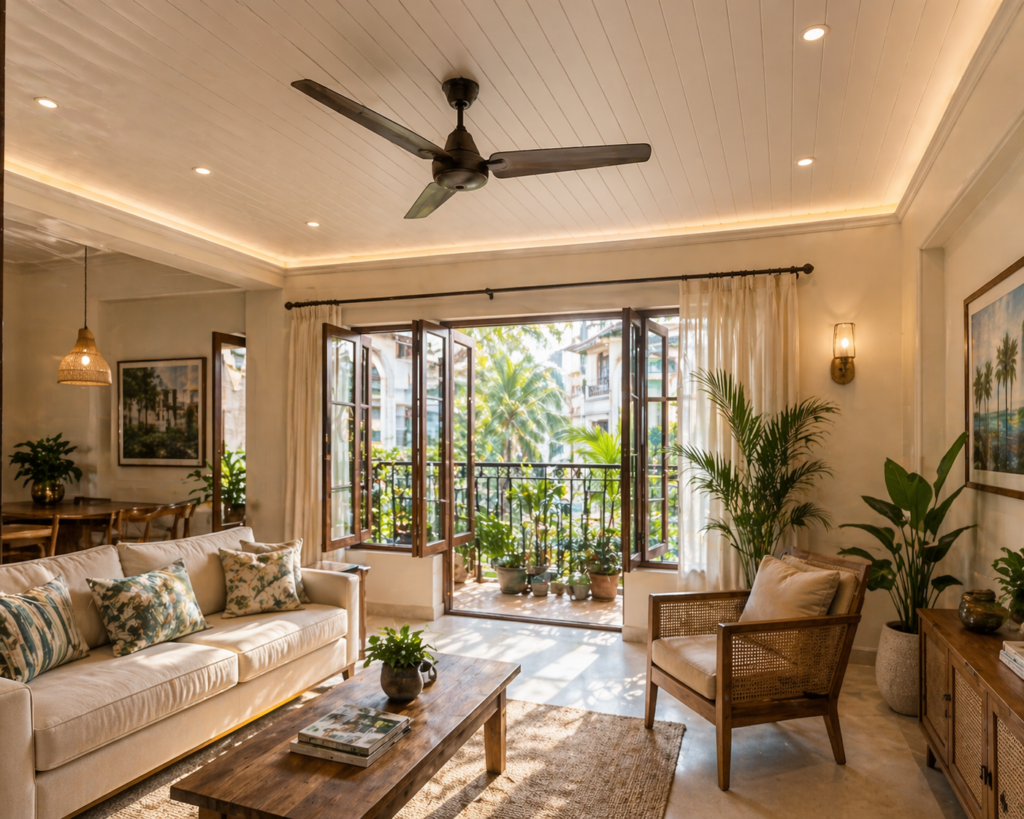
Ceiling fans improve air circulation and reduce reliance on HVAC systems. In humid spaces like bathrooms and kitchens, moreover, moisture-resistant materials such as PVC panels or treated gypsum boards prevent mold and condensation effectively. In climates like Mumbai’s, choosing the right ceiling material and finish protects the room’s structure just as much as it enhances its design.
6. Ceiling Design as a Cultural and Stylistic Statement
Throughout history and across cultures, ceilings have always carried meaning beyond structure. In Indian architecture, for example, carved wooden ceilings feature floral and geometric patterns that reflect harmony and craft. Similarly, in Middle Eastern design, domed ceilings express spiritual depth and precision. In European palaces, meanwhile, painted frescoes tell entire stories across overhead surfaces — making the ceiling the most expressive canvas in the room.
Today, these traditions are being thoughtfully reinterpreted for modern interiors. Ornate medallions have evolved into minimal rings. Coffered grids are simplified into shallow neutral panels. Lattice patterns now appear as laser-cut metal screens. Consequently, the result is a ceiling that carries cultural weight while fitting comfortably into a contemporary interior.
7. Budget, Maintenance, and Long-Term Practicality
Not every ceiling needs to be elaborate. Smart budget planning means knowing where design impact matters most. Invest in the living room, entrance, and primary bedroom — these are the spaces where ceiling details create lasting impressions. Use simpler finishes in corridors, storage rooms, and utility areas where no one lingers.
Painted ceilings need occasional touch-ups. Wood paneling requires dusting and polishing, especially in humid climates. Plaster moldings collect dust in fine details. Metal and PVC finishes are low-maintenance but can dent or discolor over time. Choose materials that balance aesthetics with the amount of upkeep the space realistically demands.
Conclusion: The Ceiling Completes the Room
The ceiling design is not an afterthought. It is a defining design decision that influences how every other element in the room performs. From light and sound to temperature and mood, the ceiling is always working — often without being noticed.
When you treat it as the fifth wall, you unlock a surface full of opportunity. The right ceiling design does not just finish the room — it transforms it.
At Maksideo Design Consultants, we bring this thinking to every project. Whether it’s a residential renovation in Mumbai or a commercial fit-out, ceiling design is always part of the conversation.