
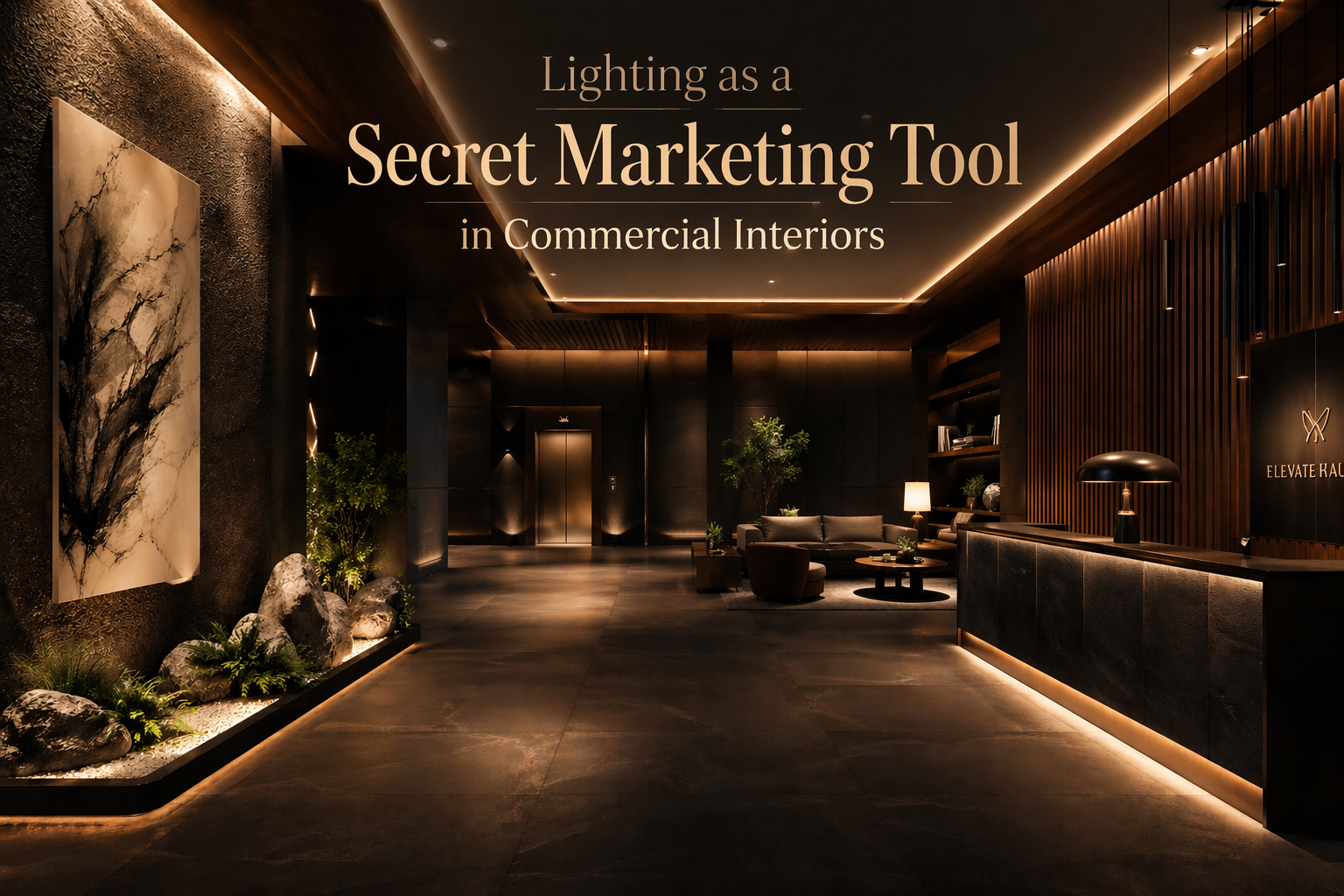
Businesses spend lakhs on brand identity — logos, signage, uniforms, packaging. Then they hand the lighting brief to the last contractor on site and call it done.
The irony, however, is that lighting does more brand communication work than almost any of those elements combined. It is the first thing a customer feels and the last thing they consciously notice. In fact, light controls mood, guides movement, elevates materials, and tells people what something is worth — before they even check the price.
At Maksideo Design Consultants, we design commercial interior lighting as a marketing tool. One that works continuously, invisibly, and with measurable impact on how your space performs.
Outline
- The Psychology of Light: How Brightness Shapes Behaviour
- Lighting as a Brand Identity Tool
- Guiding Flow and Directing Attention
- The Right Fixture for the Right Purpose
- Lighting and the Perception of Value
- Blending Natural and Artificial Light for Authenticity
- Sustainable Lighting as a Brand Statement
- Common Lighting Mistakes That Undermine Commercial Spaces
- Conclusion
1. The Psychology of Light: How Brightness Shapes Behaviour
Light affects the way people feel and make decisions in ways they rarely notice consciously. High-brightness environments signal energy and urgency, prompting faster movement and quicker decisions.
This works beautifully in fast-casual restaurants, supermarkets, and high-traffic retail zones. Softer, lower-intensity lighting, on the other hand, invites people to slow down, linger, and explore — which is exactly what you want in a boutique, lounge, or showroom.
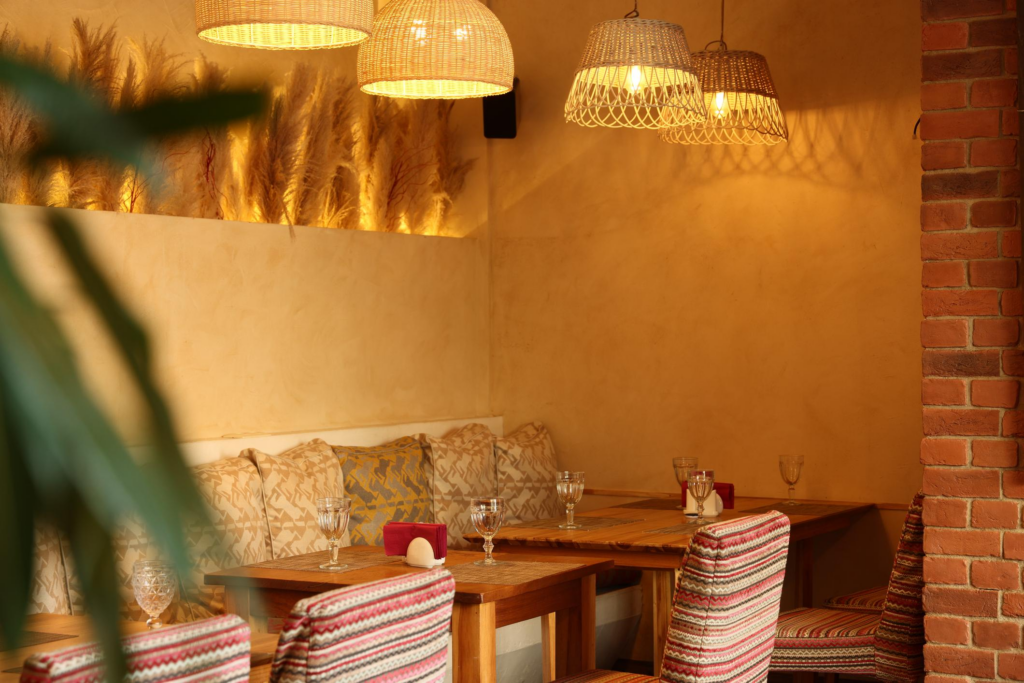
Color temperature adds another dimension. Warm light (2700K–3000K) creates a welcoming, intimate atmosphere suited to hospitality and luxury retail. Cool light (4000K–5000K) delivers focus and clarity, making it the right choice for offices, clinics, and tech-focused environments. When brightness and tone are matched to the purpose of a space, lighting becomes an invisible behaviour guide — subtly steering the customer experience from the moment they step inside.
2. Lighting as a Brand Identity Tool
A brand is not just a logo — it is a feeling. And few design elements communicate feeling as effectively as light. The lighting style you choose for your commercial space must reflect your brand’s personality.
A premium jewellery store speaks through warm, focused spotlights that make every piece gleam with exclusivity. A modern tech workspace uses crisp, cool lighting to communicate precision and innovation.
A bold creative studio might layer colored lighting and flexible zones to express energy and dynamism. Consistency is key: customers should walk into any of your locations and immediately feel your brand’s identity, before they read a single word on your walls.
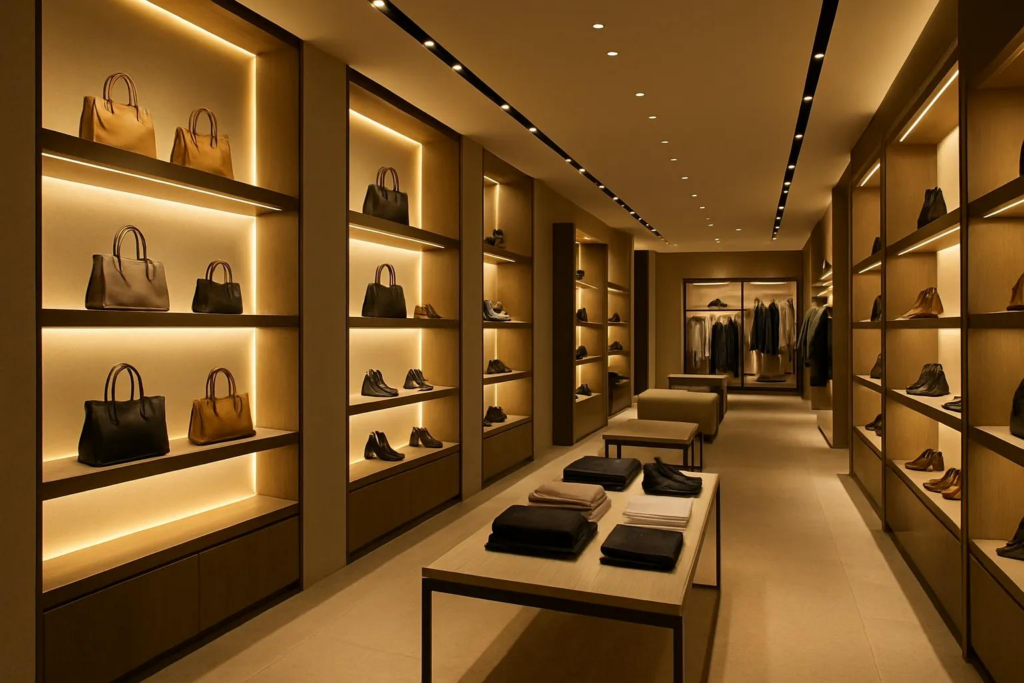
Signature lighting cues — a characteristic fixture, a recurring color tone, a specific entry glow — create powerful brand recall. Over time, customers associate these cues with your business, turning every visit into a memorable brand experience.
3. Guiding Flow and Directing Attention
In a well-designed commercial space, light tells people where to go and what to look at — without a single sign or instruction. This is called spatial hierarchy through light.
A bright, warm entrance pulls people in. Accent spotlights over a feature display stop them in their tracks. Dimmer perimeter zones nudge visitors toward the centre. Strategic placement of directional lights along pathways or over promotional shelves can increase interaction with key products and zones by a measurable margin.
Zone-based lighting goes further by giving each functional area its own identity. Brighter illumination in the main retail floor creates energy and encourages browsing. Softer light in a fitting room or consultation bay provides privacy and comfort.
Task lighting at a service counter ensures precision and professionalism. When done well, the lighting layout reads as a natural, intuitive journey through the space.
4. The Right Fixture for the Right Purpose
Understanding the range of available lighting types is essential for a layered, effective design:
- Recessed fixtures — Clean, ceiling-integrated lights that deliver ambient illumination without visual clutter. Ideal for retail floors, galleries, and offices.
- Track lighting — Adjustable heads on a rail that offer maximum flexibility for changing displays and collections. Perfect for showrooms and boutiques.
- Pendant lights — Decorative hanging fixtures that anchor zones visually and add character. Excellent over counters, café tables, or reception desks.
- Wall sconces — Mounted wall lights that add warmth, depth, and rhythm to corridors, entrances, and feature walls.
- Accent / spotlight lighting — Targeted beams that draw the eye to specific products, textures, or architectural details.
- LED systems — Energy-efficient, long-lasting, and available in the full range of color temperatures. The backbone of modern commercial lighting design.
Layering ambient, task, and accent lighting within the same space creates depth, visual interest, and a professional finish that flat, single-source lighting simply cannot achieve.
5. Lighting and the Perception of Value
There is a direct relationship between how a space is lit and how much customers are willing to pay for what is inside it. This is not opinion — it is psychology.
Targeted illumination on materials and finishes brings out grain, texture, gloss, and colour in a way that natural or flat lighting never will. A polished stone counter looks striking under a directional beam.
A leather bag on display glows with richness under a warm spotlight. These details elevate the perceived quality of the product long before the price tag is seen.
Conversely, flat overhead fluorescent light flattens texture, washes out colour, and communicates budget — regardless of the quality of what you are selling. Lighting is quite literally packaging for your products and your space.
6. Blending Natural and Artificial Light for Authenticity
Natural light is the most trusted light source there is. People are biologically calibrated to respond positively to daylight — it improves mood, reduces fatigue, and makes spaces feel open and honest. In commercial interior design, integrating natural light through windows, skylights, or glass partitions creates an authenticity that no fixture can replicate.
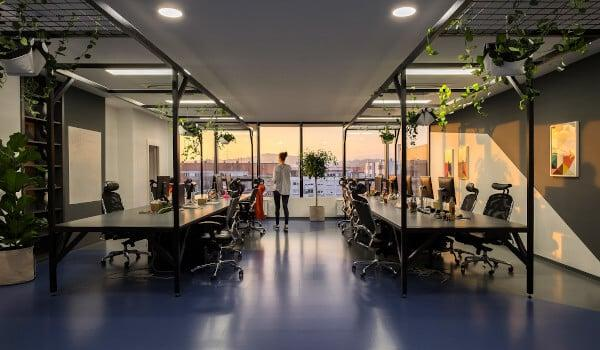
The challenge is consistency. Daylight shifts throughout the day, creating extremes of brightness and shadow. Artificial lighting must be designed to complement and compensate — brightening areas in the morning, warming up toward the evening, and always maintaining the quality of light that makes your space feel welcoming.
A smart integration of both creates an environment that feels genuinely comfortable and credible, which in turn builds trust in your brand.
7. Sustainable Lighting as a Brand Statement
Modern clients and customers pay attention to sustainability. A commercial space built around LED lighting, smart dimming systems, occupancy sensors, and daylight harvesting sends a clear message: this business is responsible, forward-thinking, and aligned with modern values.
Beyond the messaging, the business case is compelling. LED systems consume significantly less power than traditional lighting, last far longer, require less maintenance, and reduce carbon output. Smart controls allow light levels to respond dynamically to occupancy and time of day, cutting waste without compromising the quality of the experience.
At Maksideo Design Consultants, we communicate these benefits transparently to our clients — because sustainable design and good design are the same thing.
8. Common Lighting Mistakes That Undermine Commercial Spaces
Even well-designed interiors can be weakened by poor lighting decisions. Here are the most common mistakes we encounter:
- Over-lighting key zones — Too much light creates glare, washes out texture, and makes spaces feel clinical or harsh. It is just as damaging as too little.
- Under-lighting focal areas — Products, signage, and service counters that are poorly lit are simply invisible to the customer.
- Inconsistency with brand tone — Bright, cool lighting in a luxury boutique, or dim, warm light in a high-energy retail store, creates a disconnect that visitors feel even if they cannot name it.
- Neglecting maintenance — Flickering bulbs, burned-out fixtures, and dusty fittings signal neglect. Perception is reality, and poorly maintained lighting degrades trust immediately.
A professional lighting design process — including simulation, material testing, and a layered installation plan — prevents all of these issues before the space opens.
Conclusion
Every great commercial interior has lighting that works quietly and powerfully in the background. It makes products look better, spaces feel right, and people stay longer. More importantly, it builds brand identity without a word, guides movement without a sign, and elevates perceived value without changing a price tag.
At Maksideo Design Consultants, we approach lighting as an integral part of the design strategy — not an afterthought. We plan, layer, and fine-tune every source of light to ensure that your commercial space performs as hard as it looks.
If you are planning a new or redesigning an existing space, let us show you what purposeful lighting can do for your brand.