
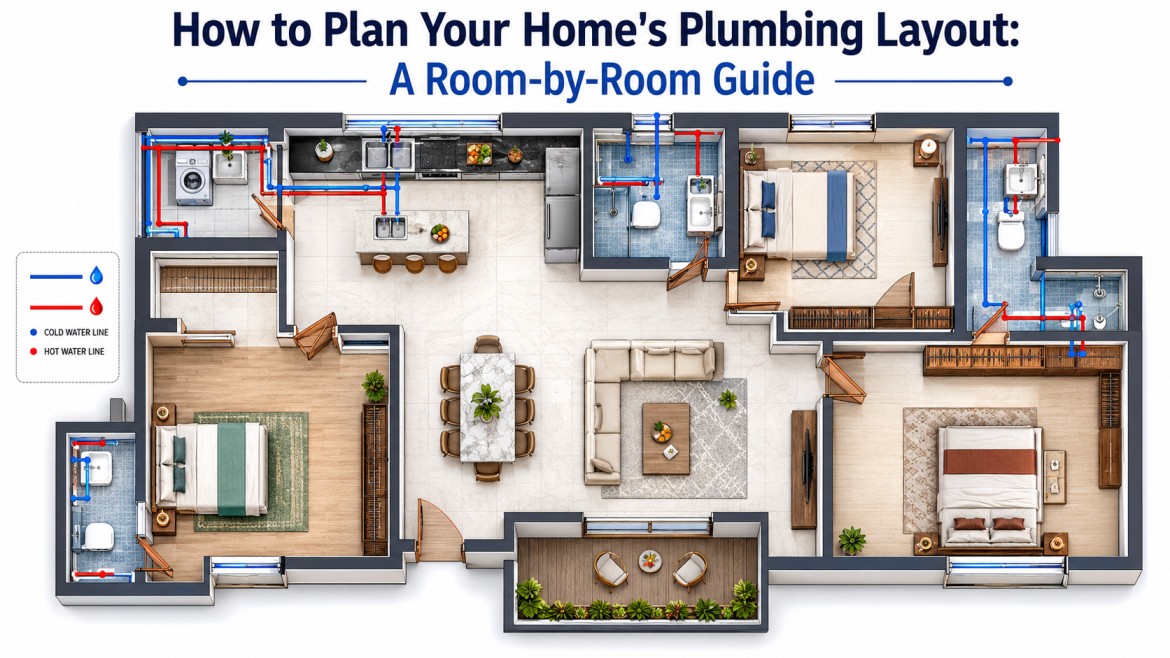
Most homeowners think about plumbing only when something goes wrong. A leaking pipe, a blocked drain, or a tap that takes forever to deliver hot water — these are the moments when you wish someone had planned things better at the start. The truth is, a well-thought-out plumbing layout makes everyday life smoother, cuts down on water and energy bills, and saves you from expensive rework during or after construction.
At Maksideo Design Consultants, we work alongside homeowners and contractors across Mumbai and MMR to make sure the plumbing plan is figured out before a single pipe goes into the wall. This room-by-room guide gives you a clear picture of what to plan, what to avoid, and why getting the layout right at the design stage is one of the smartest investments you can make.
Outline
- Why Plumbing Layout Planning Matters Before Construction Begins
- Room-by-Room Plumbing Layout Guide
- Key Plumbing Planning Principles That Apply to Every Room
- Common Plumbing Layout Mistakes to Avoid
- When to Get a Plumbing Expert Involved
- Conclusion: Plan It Right the First Time
Why Plumbing Layout Planning Matters Before Construction Begins
Plumbing is one of those systems that needs to be decided early — ideally before your architect finalises the floor plan. Once walls go up and floors get laid, moving a pipe becomes costly and disruptive. Even in a renovation, poor original planning often means hacking through tiles or replastering sections of walls to fix what should have been sorted in the design phase.
There are three key reasons to plan your home plumbing layout carefully:
- Water pressure stays consistent when wet zones are clustered and pipe runs are short.
- Hot water reaches fixtures faster when the water heater is positioned close to points of use.
- Drainage works efficiently when slopes and venting are calculated correctly from the start.
Moreover, a well-planned plumbing layout also affects how your interior design comes together. Fixture positions, wall chases, and tile layouts all depend on where the supply and drain lines run. Getting the plumbing right makes the interior finishes easier to execute — and better looking.
Room-by-Room Plumbing Layout Guide
Kitchen Plumbing Layout
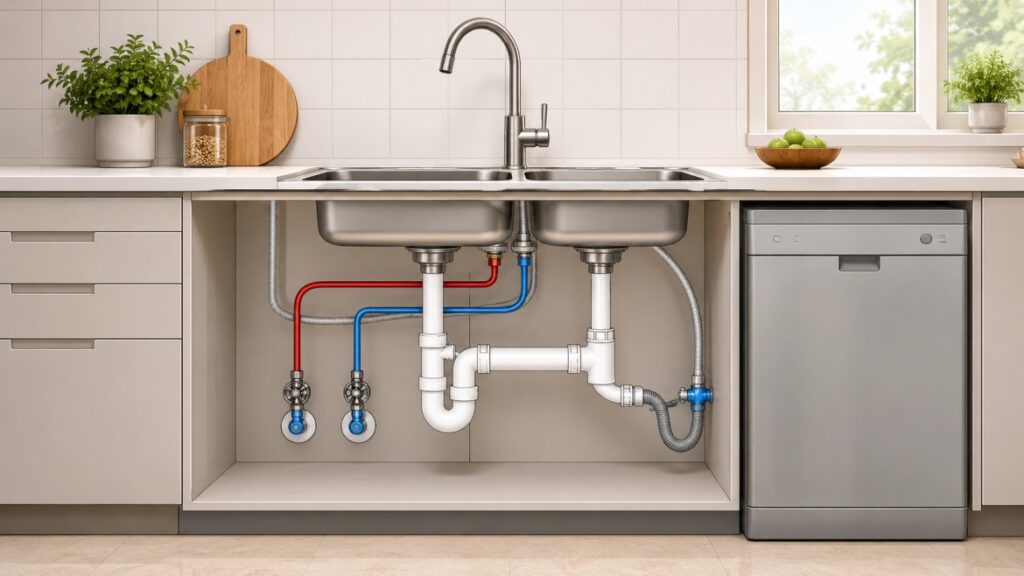
The kitchen sees constant water use, so getting the plumbing position right here is critical. Most kitchen plumbing problems — a slow drain, rattling pipes, or low pressure at the tap — trace back to decisions made before the tiles went in.
Here is what to plan for:
- Sink position: Ideally, the kitchen sink should sit along an exterior wall or close to the building’s main stack. This keeps drain runs short and slope consistent. A drain that travels too far horizontally before reaching the stack is more likely to block.
- Hot and cold supply lines: Run both supply lines inside the kitchen cabinet below the sink. Avoid running them under the floor slab where access becomes impossible without breaking.
- Dishwasher and washing machine connections: If you plan to have a dishwasher or a washing machine in the kitchen or utility area, provision the drain and supply connections early. Adding them later means breaking tiles.
- RO and water purifier: Many Mumbai homes use under-sink RO systems. Plan a separate cold water feed and a drain connection for the reject water line during the rough-in stage.
Also, make sure the kitchen drain has a bottle trap or P-trap to prevent sewer gases from entering the space. This is often overlooked but makes a real difference in keeping your kitchen odour-free.
Master Bathroom and Ensuite Plumbing
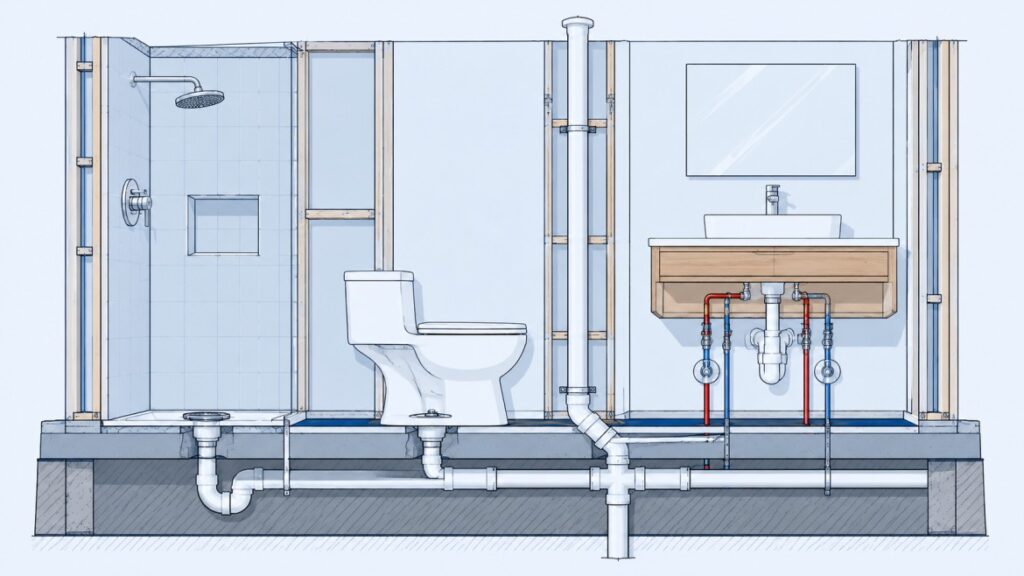
The bathroom is where most of the plumbing action happens in any home. A typical bathroom has three to five fixtures — shower or bathtub, toilet, washbasin, and sometimes a separate hand shower or bidet — and each needs its own supply and drain connection.
Key planning points for bathroom plumbing:
- Wet wall: Cluster all plumbing on one wall — commonly called the wet wall. This concentrates pipes in one zone, simplifies access for maintenance, and keeps chasing to a minimum.
- Toilet placement: The toilet flange (the connection point between the toilet and the drain pipe) must be set before the floor tile goes down. Standard clearance is 300 mm from the centre of the flange to the side wall. Placing it incorrectly means your toilet will not fit flush against the wall.
- Shower drain position: If you want a concealed shower drain or a linear drain, its position needs to be mapped during the concrete slab work. Retrofit is possible but expensive.
- Water heater proximity: In India, most bathrooms have a geysers. The geysers should be close to the shower and basin to reduce the wait time for hot water and cut energy waste.
- Ventilation pipe: Drains need a vent to work properly. Without proper venting, water seals in traps get siphoned out, which lets sewer gases in. Make sure the vent stack is included in the plan from the beginning.
Common Bathroom and Guest Toilet
The common bathroom and guest toilet follow the same principles as the master bathroom but are often smaller. Because space is tighter, planning becomes even more important.
Pay attention to these details:
- Wall-hung toilets versus floor-mounted: Wall-hung toilets need a concealed cistern inside the wall. This requires deeper cavity walls and needs to be planned before construction, not added later.
- Corner basins and compact layouts: In smaller bathrooms, corner basins save space. However, they still need proper supply lines and a P-trap drain. Plan the rough-in position correctly so the basin sits naturally in the corner without exposed pipework.
- Shared stack: In apartment construction, multiple bathrooms often share a common stack. Make sure the plumber coordinates with the building’s main drainage plan so your connections align.
Utility Area and Washing Zone
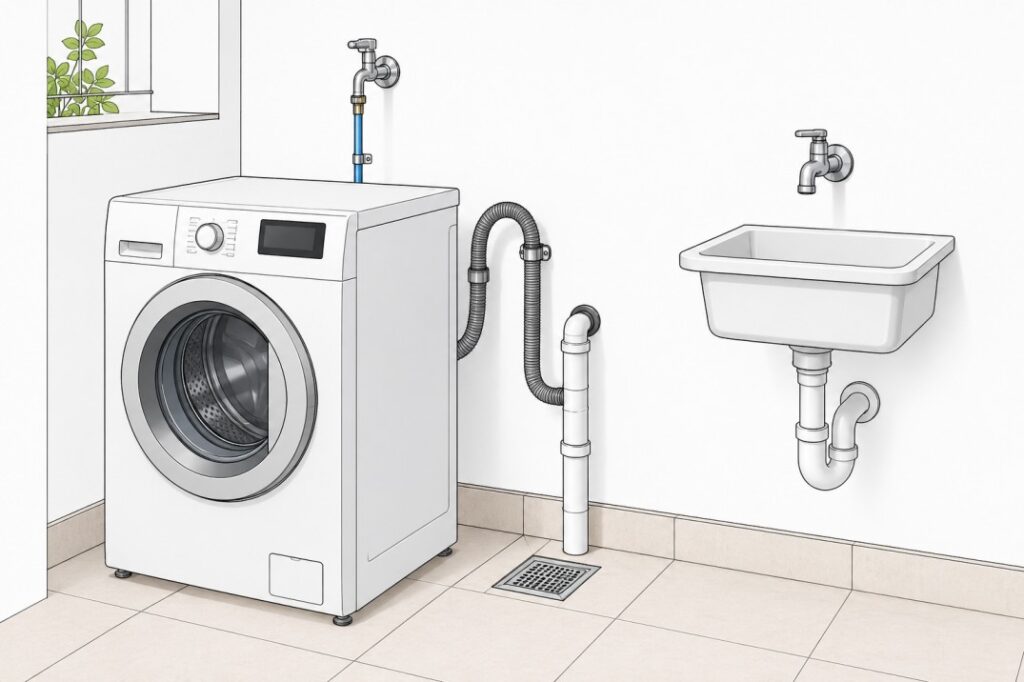
The utility or service area in an Indian home typically houses the washing machine, sometimes a sink, and often a floor drain. Despite being functional rather than decorative, this space needs careful plumbing planning.
- Washing machine supply and drain: Position a dedicated cold water tap and a drain outlet at the right height. The drain hose from the machine typically exits at about 600–900 mm. Get this height right so water flows in smoothly without the hose being forced into an awkward position.
- Floor drain: A floor drain in the utility area is essential. Make sure the floor slopes toward the drain at a gradient of at least 1:100. Waterproofing around the drain is equally important to prevent seepage into the slab.
- Tap for mops and buckets: A low-level tap close to the floor makes everyday tasks easier. Plan it during the rough-in, not as an afterthought.
Balcony and Outdoor Areas
Balconies in Mumbai apartments often serve as drying zones, small gardens, or additional seating. Adding a water point to the balcony is useful but requires planning before the balcony floor is finished.
- Balcony tap: A single cold water supply point is usually enough. Run the pipe inside the wall during construction so there is no exposed pipe on the exterior face.
- Balcony drainage: Every balcony needs a drain. The common failure here is insufficient slope. Water pooling on a balcony causes seepage into the slab below. Plan a minimum slope of 1:80 toward the drain outlet.
- Garden or terrace planting zones: If you plan to have planters or a green wall, consider running a supply line for a drip system early. Adding it later requires cutting into the finished surface.
Key Plumbing Planning Principles That Apply to Every Room
Beyond the room-specific points above, there are a few universal principles that apply across your entire home plumbing layout:
- Group wet zones together: Bathrooms, kitchen, and utility areas should share walls wherever possible. This keeps pipe runs short, reduces pressure loss, and cuts material costs.
- Keep the water heater central: In a 2BHK or 3BHK, placing the water heater in a central location — for example, a service corridor between bathrooms — reduces the pipe length to all hot water points. This means faster hot water delivery and lower energy use.
- Plan for maintenance access: Every shut-off valve, check valve, and pressure-reducing valve needs an access panel. Plan these during the design phase so the interior finishes do not box them in.
- Use ISI-marked pipes: For any plumbing work in India, always use CPVC or UPVC pipes with ISI certification. For hot water lines, CPVC is the standard choice. Using substandard materials to save cost creates failures within a few years.
- Include a pressure-reducing valve (PRV): In Mumbai’s high-rise buildings and in many municipal supply lines, water pressure can be erratic. A PRV at the main inlet protects all your fixtures and appliances from pressure spikes.
Common Plumbing Layout Mistakes to Avoid
Even with good intentions, certain mistakes come up repeatedly in residential plumbing projects across Mumbai. Here is what to watch out for:
- Placing plumbing on external walls in humid coastal climates: External walls in Mumbai face high humidity and rainfall. Pipes inside external walls are more prone to condensation and seepage over time. Wherever possible, route plumbing along internal walls.
- Skipping proper venting: Many local contractors skip or undersized the vent stack to save cost. This always causes problems — gurgling drains, smell issues, and trap seal failures.
- Not provisioning for water meters or sub-meters: In newer buildings, individual water meters are increasingly required. Plan for the meter location and the necessary pipe connections in the layout.
- Ignoring the main stack position early: The main drainage stack is a vertical pipe that carries waste from all floors. Its position determines where your bathrooms and toilets can go. Finalise the stack location before the floor plan is locked.
- Rushing the waterproofing: Waterproofing in wet areas — bathroom floors, utility zones, balconies — needs to go on before tiling. Skipping or rushing this step leads to seepage within a few years.
When to Get a Plumbing Expert Involved
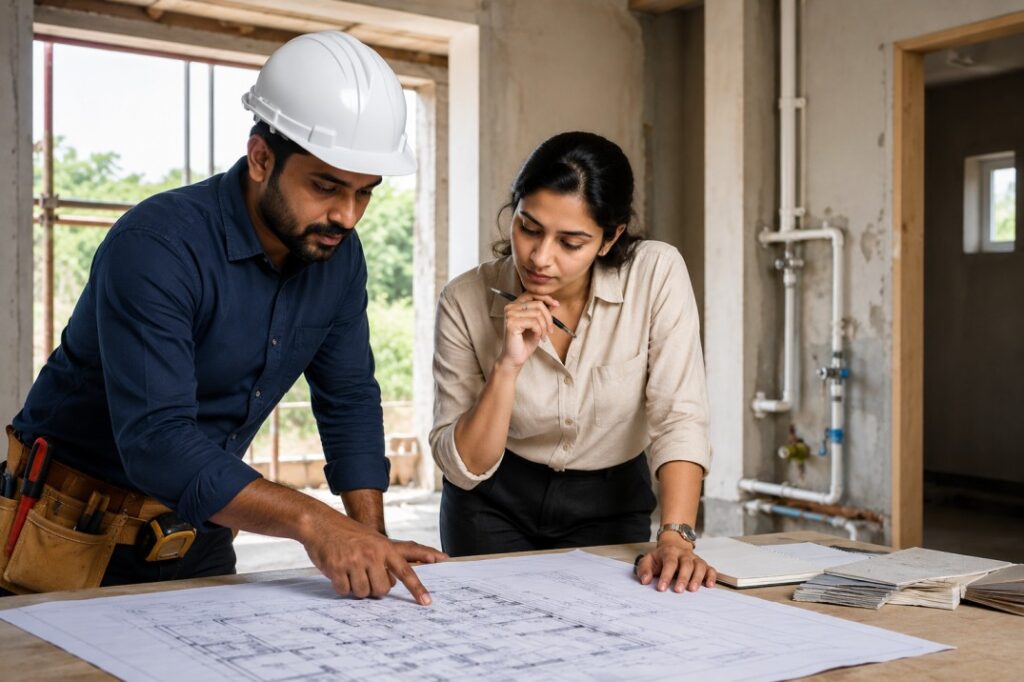
Ideally, a licensed plumber should be consulted during the design stage — not just called in to execute once the walls are up. At Maksideo Design Consultants, we coordinate between architects, interior designers, and plumbing contractors from the concept stage. This way, the plumbing layout works with the interior design, not against it.
Specifically, bring a plumber in for:
- Pre-construction meetings to review the floor plan and identify wet zone placement.
- Rough-in inspections before concrete is poured or walls are plastered.
- Post-plumbing inspections before tiles and fixtures go in.
- Pressure testing of the supply lines before the fit-out begins.
A good plumbing consultant will also advise on water storage requirements — especially relevant in Mumbai where water supply can be intermittent — and on solar water heater integration if that is something you are considering.
Conclusion: Plan It Right the First Time
Your home’s plumbing layout is not the most glamorous part of interior design, but it is one of the most consequential. Get it right and everything else — the tiles, the fixtures, the cabinetry — comes together cleanly. Get it wrong and you are dealing with repairs, replastering, and rework for years.
Whether you are designing a new home, renovating a flat, or doing a room-by-room upgrade, taking time at the start to plan the plumbing layout properly pays back many times over. The room-by-room approach in this guide gives you a checklist to work through with your designer and contractor before construction begins.
At Maksideo Design Consultants, we help clients across Mumbai and MMR get these decisions right from day one. If you are in the planning stage for a new home or renovation and want to make sure the plumbing layout is sorted before construction begins, reach out to our team. We are here to help.