Walk into any space — a home, an office, a café — and something registers before you’ve even looked around. It’s not the colour of the walls or the shape of the furniture. It’s texture and material choices. The grain of wood underfoot, the roughness of a stone wall, the softness of a cushion you brush past. Texture communicates before anything else does.
At Maksideo Design Consultants, material choices for homes and commercial spaces are among the most deliberate decisions we make on any project. And the reasoning behind those choices changes completely depending on whether we’re designing a residence or a Here’s why.
Outline
- What Texture Really Means
- The Hidden Language of Materials
- Home Interiors: Materials That Feel Like Home
- Natural Materials & Relaxation
- The Science Behind ‘Cosy’
- Seasonal Texture Swaps
4. Commercial Spaces: Materials That Mean Business
- Signalling Brand & Competence
- Material Hierarchy in Offices
- Employee Focus & Morale
5. Sound & Texture: The Acoustic Connection
6. The True Cost of Texture
7. Making the Right Choice for Your Space
8. Frequently Asked Questions
9. Conclusion
1. What Texture Really Means
Most people think of texture as a purely tactile thing — rough or smooth, hard or soft. However, in interior design, texture works across all the senses simultaneously. It shapes how sound moves through a room, how warm or cool a surface feels, and how light falls and reflects.
What makes texture such a powerful design tool is that it works on people physically and emotionally at the same time. A space can be well-proportioned and beautifully lit, but if the surfaces feel cold or harsh, something feels off. People may not be able to name it — but they feel it.
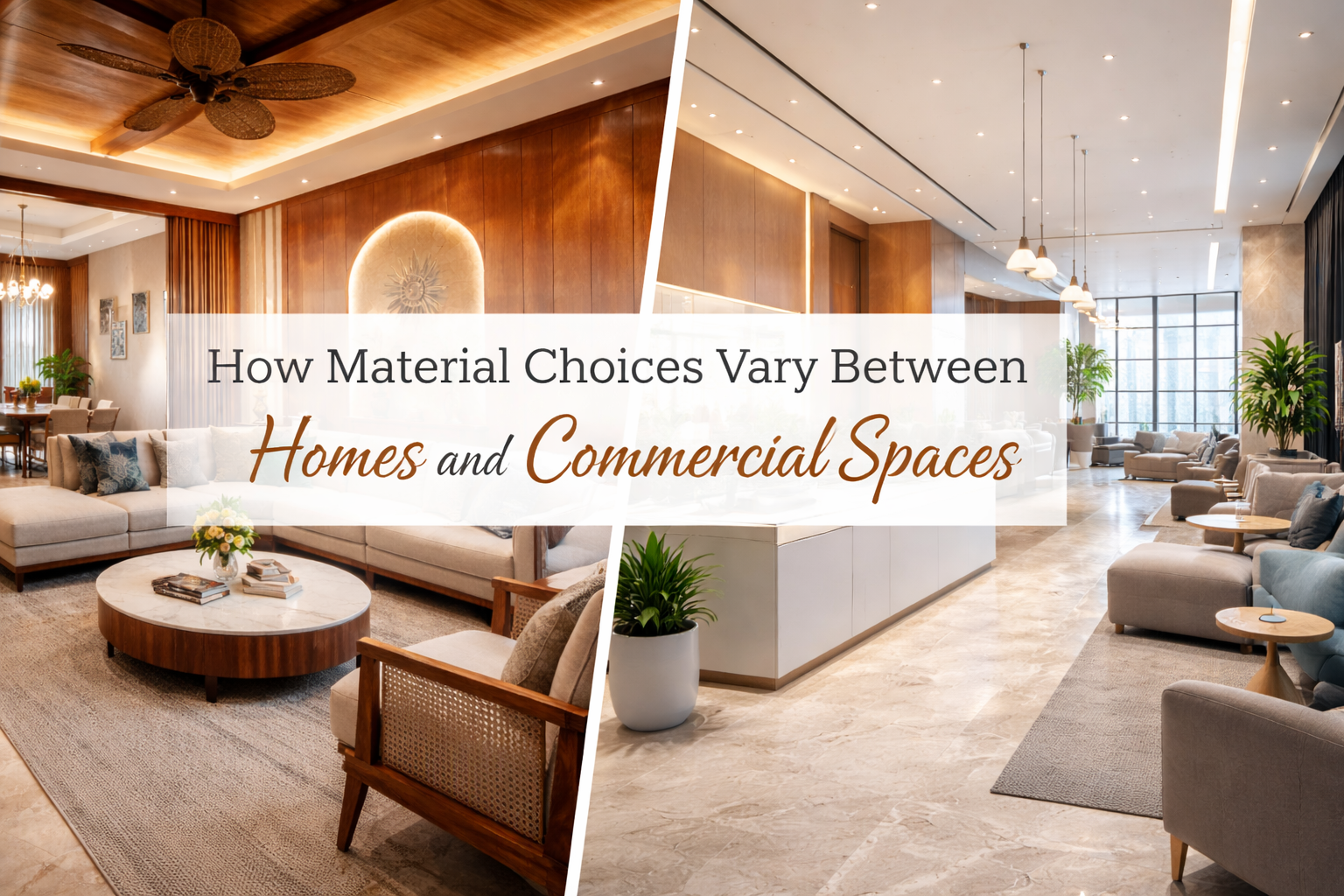
In homes, texture is chosen to comfort. In commercial spaces, it’s chosen to perform. That distinction drives almost every material decision we make.
2. The Hidden Language of Materials
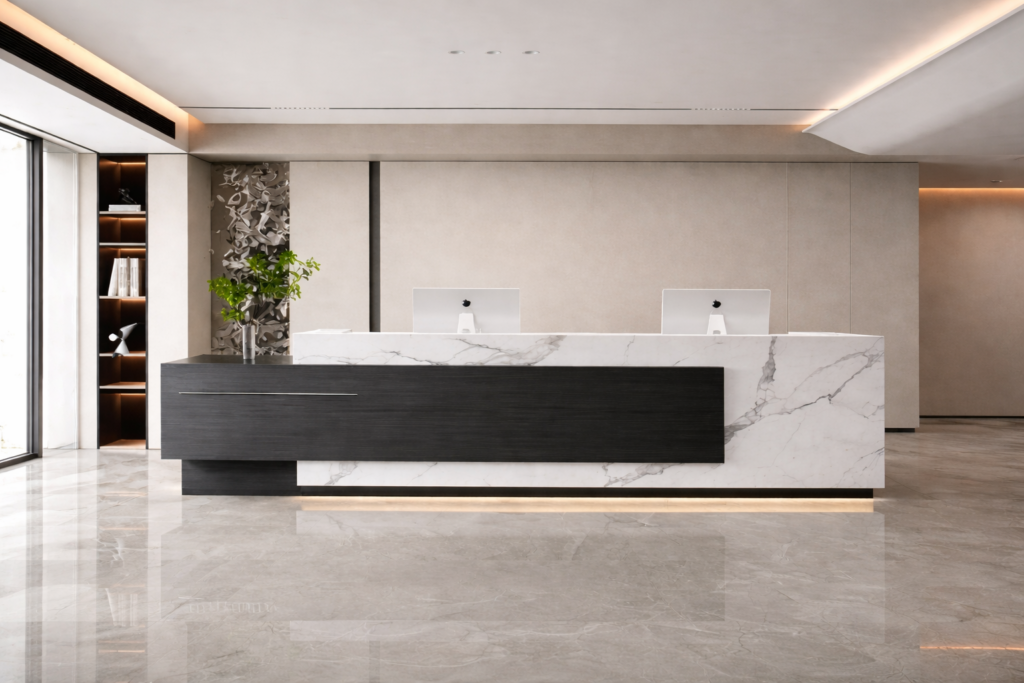
Textures communicate without words. The moment someone walks into a space, surfaces are already shaping their impression. A rough stone wall reads as grounded and solid. A glossy marble reception desk signals precision and status. Layered linen and warm timber feel like an invitation to stay a while.
This isn’t just design theory — it’s deeply human. For thousands of years, people built shelters from wood, stone, and clay. Those materials meant safety, warmth, and permanence. That association hasn’t disappeared; it’s just moved indoors. As a result, spaces that incorporate natural textures tend to feel more instinctively calming and trustworthy, regardless of how contemporary the design is.
The practical takeaway: every material you choose is quietly making a statement. The question is whether that statement matches the purpose of your space.
3. Home Interiors: Materials That Feel Like Home
Natural Materials and Relaxation
Homes are where people recover. Therefore, the textures in a home should actively support that — and the right materials genuinely do. Natural surfaces like wood, clay, and untreated stone have been shown to reduce cortisol levels and promote calmer breathing. It’s not just aesthetic preference; there’s a physiological response to materials that feel organic and unhurried.
Wood with visible grain, raw clay plaster, soft cotton, cork — these textures absorb sound, regulate temperature slightly, and create a sensory environment that doesn’t overstimulate. They give the body permission to slow down.

The Science Behind ‘Cosy’
‘Cosy’ isn’t a vague feeling — it has a specific neurological basis. When skin comes into contact with soft, warm textures like wool, velvet, or brushed cotton, the brain’s limbic system responds. Stress signals drop. This is why certain rooms feel immediately safe and others feel clinical, even when both are clean and well-designed.
Pile height, surface weight, and material temperature all contribute to this response. A deep-pile rug reads differently to the brain than a polished concrete floor, even before anyone steps on it.
Seasonal Texture Swaps
One practical approach we recommend to our residential clients: swap textures with the seasons rather than redecorating entirely. In cooler months, introduce heavier, warmer materials — thick knit throws, flannel cushion covers, layered rugs. As it warms up, switch to linen, light cotton, and natural weaves.
The layout stays the same, but the feeling of the room shifts. It’s a small change that makes a significant difference — and it’s far more cost-effective than a full refresh.
4. Commercial Spaces: Materials That Mean Business
Signalling Brand and Competence
In a commercial context, texture stops being about personal comfort and starts being about brand communication. The surfaces in your reception area, boardroom, or retail floor are making claims about your company before anyone has said a word.
Smooth matte finishes suggest control and focus. Brushed metal reads as precise and contemporary. Natural stone conveys permanence and authority. In contrast, a fintech startup and a heritage law firm might both have beautiful offices — but the material language of each should be entirely different, because what they need to communicate is entirely different.
Material Hierarchy in Offices
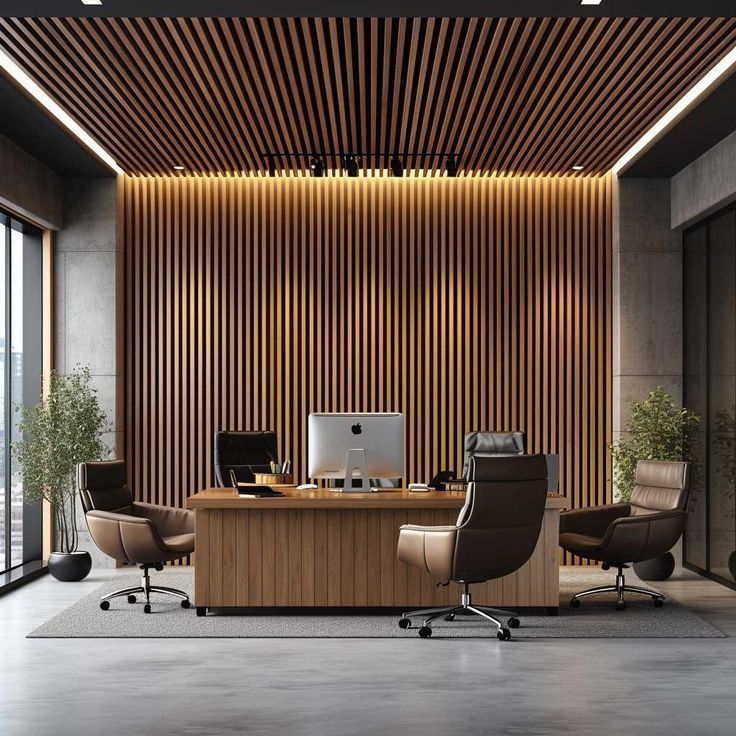
Not every surface in a commercial space deserves the same level of investment — and experienced designers know this. Client-facing areas — reception, boardrooms, client lounges — receive premium finishes because these spaces create first impressions. Natural stone, fine timber joinery, and custom texture treatments belong here.
Workstations and shared zones shift toward durability and practicality: laminate surfaces, acoustic panels, hard-wearing fabrics. This hierarchy isn’t about cutting corners — it’s about directing budget where it delivers the most value.
Employee Focus and Morale
Material choices affect the people who work in a space every day. Overly glossy or hard surfaces reflect too much light, produce noise, and create a subtle sense of emotional distance. Over time, that adds to fatigue.
Surfaces that are softer to the eye and quieter acoustically — non-reflective finishes, textured wall panels, warm-toned flooring — contribute to a calmer working environment. Matching surface choices to work modes is a detail that pays back in productivity and staff satisfaction.
5. Sound & Texture: The Acoustic Connection
Texture and acoustics are inseparable. Soft, porous materials — velvet, deep-pile rugs, upholstered walls, fabric curtains — absorb sound. They reduce echo and create quieter, more intimate zones. In homes, this is almost always desirable.
In commercial spaces, however, the equation is more nuanced. Hard, reflective surfaces like glass, polished stone, and metal help carry speech — useful in presentation rooms, retail environments, and open-plan receptions. But without balance, these same surfaces create noise buildup that becomes exhausting.
The solution is intentional layering: acoustic panels in ceiling baffles or upholstered wall sections, combined with the reflective materials needed for clarity. Good acoustic design is invisible when done well — you simply notice that a space feels right.
6. The True Cost of Texture
| Factor | Residential | Commercial |
| Priority | Personal comfort & emotional warmth | Durability, brand image & easy upkeep |
| Material Tone | Soft, warm, natural — wood, fabric, clay | Sleek, structured — stone, metal, laminate |
| Acoustics | Absorb sound; create quiet, cosy zones | Balance hard & soft for speech clarity |
| Cost Logic | Long-term emotional value | Performance & return on investment |
| Maintenance | Moderate; natural materials need care | High-traffic; must withstand heavy use |
| Design Goal | Feel safe, personal, relaxed | Feel professional, trustworthy, on-brand |
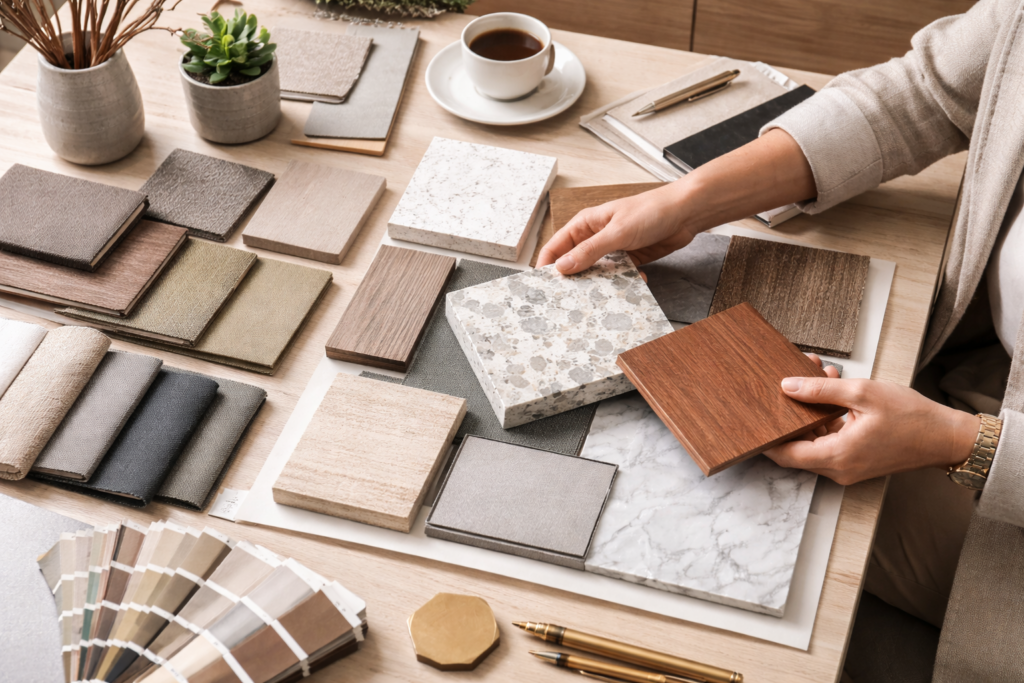
Hidden Maintenance Costs Worth Knowing
- Natural hardwood, stone, and leather: beautiful but require regular sealing, conditioning, and refinishing
- Laminates and vinyl: low maintenance day-to-day, but often need full replacement when damaged
- Carpets and soft fabrics: affordable upfront, but wear faster in high-traffic areas and need frequent cleaning
- High-gloss and metal surfaces: durable but show smudges and scratches — require consistent upkeep
Texture and Resale Value
Material quality directly influences how a property is perceived and priced. Spaces with thoughtfully chosen, timeless textures photograph better, feel more inviting in person, and justify stronger pricing — whether selling or letting. Natural finishes, quality plasterwork, and well-maintained surfaces communicate that a space has been cared for. Mismatched or cheap finishes do the opposite, regardless of location or layout.
7. Making the Right Choice for Your Space
Before choosing any material, ask these questions:
- How will this space actually be used — and by whom?
- What level of foot traffic, moisture, or impact should the material handle?
- What impression does this space need to create in the first 10 seconds?
- What are the real long-term maintenance demands of this material?
- Does this texture complement the light conditions, surrounding finishes, and overall palette?
On budget: invest in high-impact zones first. In a home, that’s the living room and entryway. In an office, it’s reception and client-facing areas. Use budget-friendly materials in less prominent zones — textured laminates, woven vinyl, painted surfaces — and layer them thoughtfully. Depth doesn’t require expensive materials; it requires considered ones.
8. Frequently Asked Questions
Q: What are the best materials for home interiors in India?
A: Natural materials like wood, clay plaster, cotton, and stone work best for Indian home interiors. They regulate temperature, absorb sound, and create a calming sensory environment. In humid regions, opt for treated wood and moisture-resistant finishes.
Q: How do material choices differ between residential and commercial interior design?
A: In residential spaces, materials are chosen for comfort, warmth, and personal expression. In commercial spaces, the priority shifts to durability, brand communication, and performance. Commercial interiors also require a material hierarchy — premium finishes in client-facing areas, practical surfaces in workspaces.
Q: Which materials are best for commercial office interiors in India?
A: For Indian commercial offices, the best materials include polished stone or large-format tiles for reception areas, acoustic wall panels for workspaces, laminate surfaces for workstations, and brushed metal or glass for boardrooms. The key is balancing brand identity with durability.
Q: How does texture affect acoustics in interior design?
A: Soft, porous materials like fabric, rugs, and upholstered panels absorb sound and reduce echo — ideal for homes and quiet office zones. Hard surfaces like glass and polished stone reflect sound, which can aid speech clarity in presentation spaces but cause noise fatigue if overused.
Q: Are natural materials worth the higher cost in interior design?
A: Yes, in most cases. Natural materials like hardwood, stone, and clay plaster add long-term value, improve how a space feels, and age more gracefully than synthetic alternatives. They also have psychological benefits — studies show natural textures reduce stress and improve wellbeing.
9. Conclusion
Texture is one of those design elements that works quietly but constantly. In homes, it softens, warms, and reassures. In commercial spaces, it signals, performs, and endures. The materials you choose communicate what a space is for — and who it’s designed to serve.
Whether you’re designing a family home or fitting out a 5,000 sq ft office, the principle is the same: choose materials that match the purpose of the space, not just the look. When texture is chosen deliberately, the result is a space that feels right — and that feeling is exactly what stays with people long after they’ve left.