
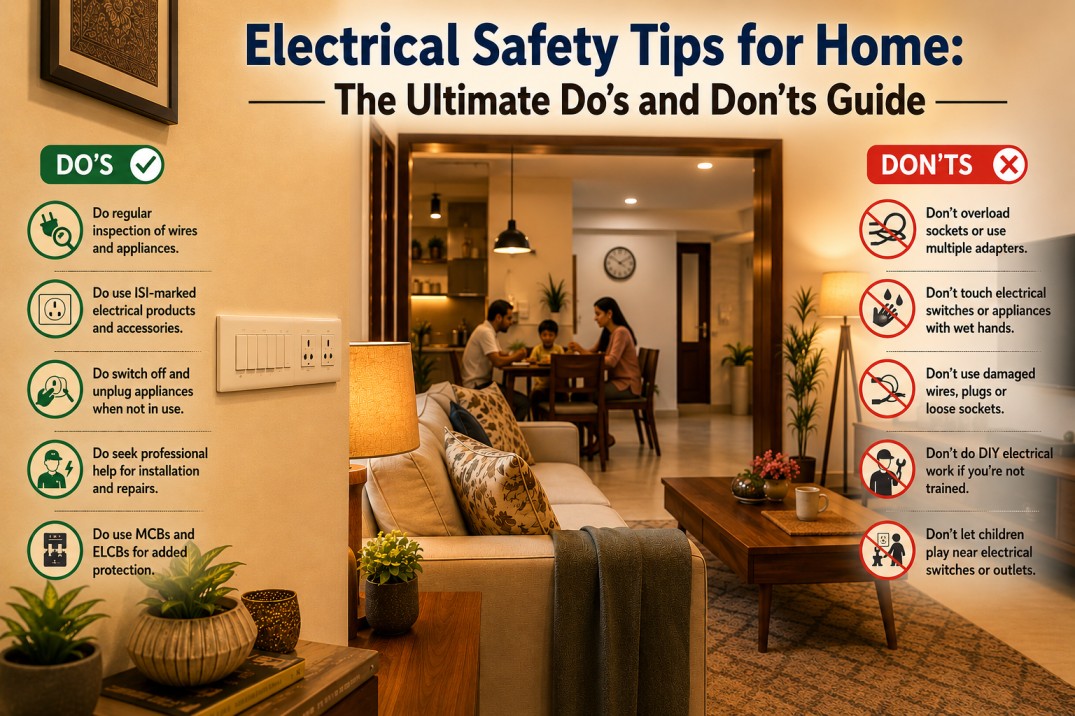
Most homeowners spend a lot of time thinking about interior design, furniture, and paint colours. But very few think about electrical safety until something goes wrong. And in India, where monsoon humidity, voltage fluctuations, and ageing infrastructure are all very real concerns, electrical hazards at home deserve far more attention than they usually get.
At Maksideo Design Consultants, we integrate electrical planning into every project we take on. Because a beautiful home is only truly beautiful when it is also safe. So, in this guide, we share practical electrical safety tips for home that every Indian homeowner should know — whether you are moving into a new flat, renovating an old house, or simply want to make your current home safer.
Outline
- Why Electrical Safety at Home Matters More in India
- The Do’s: Electrical Safety Tips Every Indian Homeowner Should Follow
- The Don’ts: Electrical Mistakes You Must Avoid at Home
- Special Electrical Safety Tips for the Monsoon Season in India
- Electrical Safety Tips Specifically for Homes with Children
- How Maksideo Design Consultants Approaches Electrical Safety in Every Project
- Final Thoughts
Why Electrical Safety at Home Matters More in India
India has a unique set of electrical challenges that homeowners in other countries do not always face. Voltage fluctuations are common, especially during summer and monsoon seasons. Older homes often carry outdated wiring that was not designed to handle modern electrical loads. Moreover, humidity during the monsoons significantly increases the risk of short circuits and electric shocks.
According to the National Crime Records Bureau, electrical fires account for a significant percentage of accidental home fires across India every year. The good news, however, is that most of these accidents are completely preventable with the right precautions.
The Do’s: Electrical Safety Tips Every Indian Homeowner Should Follow
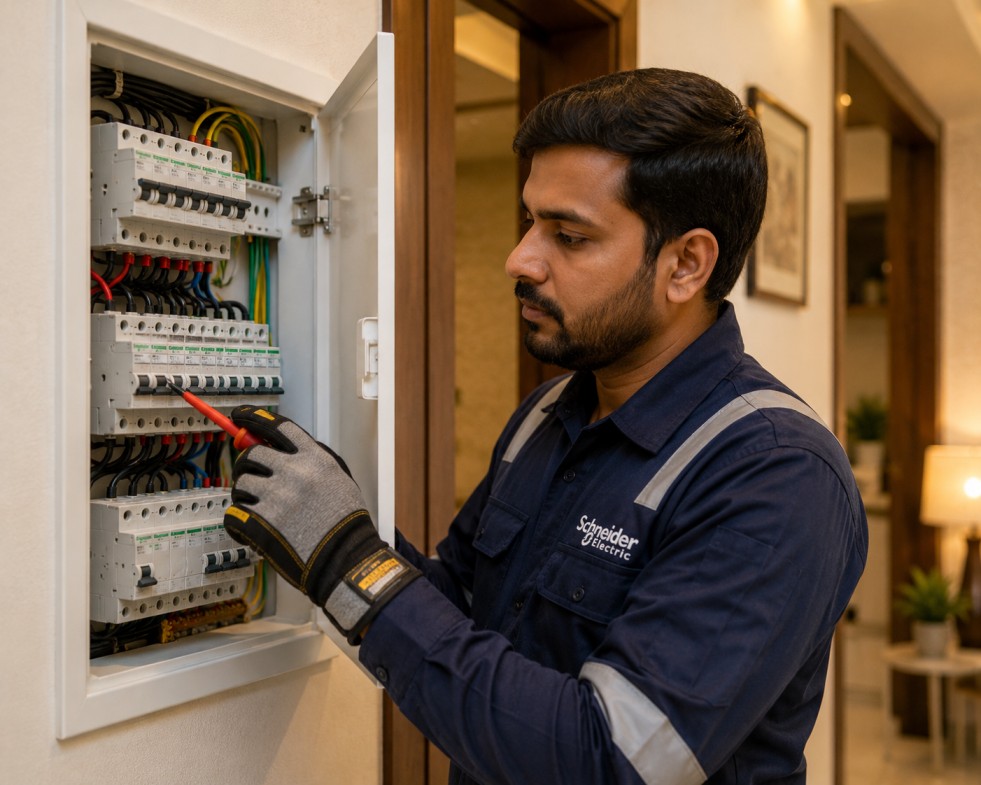
1. Get Your Wiring Inspected Regularly
If your home is more than 10 years old, get a licensed electrician to inspect the wiring at least once every two to three years. Old wires lose insulation over time, and that creates serious fire and shock risks. So, do not wait for a problem to show up before you call someone in.
2. Always Use ISI-Marked Electrical Products
Whether it is a switchboard, extension cord, or circuit breaker, always buy products with the ISI mark. These products meet the safety standards set by the Bureau of Indian Standards. In contrast, cheap, unbranded electrical products are one of the biggest causes of home electrical fires in India.
3. Install an MCB and RCCB in Your Distribution Board
A Miniature Circuit Breaker (MCB) trips automatically when it detects a circuit overload or short circuit. A Residual Current Circuit Breaker (RCCB) detects leakage current and cuts power instantly, which prevents electric shocks. Together, these two devices protect both your home and your family. So, if your distribution board does not already have them, upgrade it as soon as possible.
4. Use Separate Circuits for Heavy Appliances
Air conditioners, geysers, washing machines, and microwaves draw a lot of current. Because of this, each of these appliances needs its own dedicated circuit. Running them all on a shared circuit overloads the wiring and increases fire risk significantly.
5. Install Earthing in Every Circuit
Proper earthing gives excess current a safe path to discharge into the ground rather than through a person. This is a non-negotiable safety requirement under Indian electrical standards. Furthermore, without proper earthing, even a minor fault in an appliance can turn dangerous.
6. Use Surge Protectors for Sensitive Electronics
Voltage surges are common in Indian cities, especially during the monsoon season. Therefore, always plug sensitive electronics like televisions, computers, and refrigerators into good-quality surge protectors. This small investment can save you from expensive repairs and dangerous situations.
7. Label Your Circuit Breakers
This sounds simple, but it makes a huge difference during an emergency. Label each breaker in your distribution board so that anyone in the family can quickly cut power to the right circuit if needed. Because in an emergency, every second counts.
The Don’ts: Electrical Mistakes You Must Avoid at Home
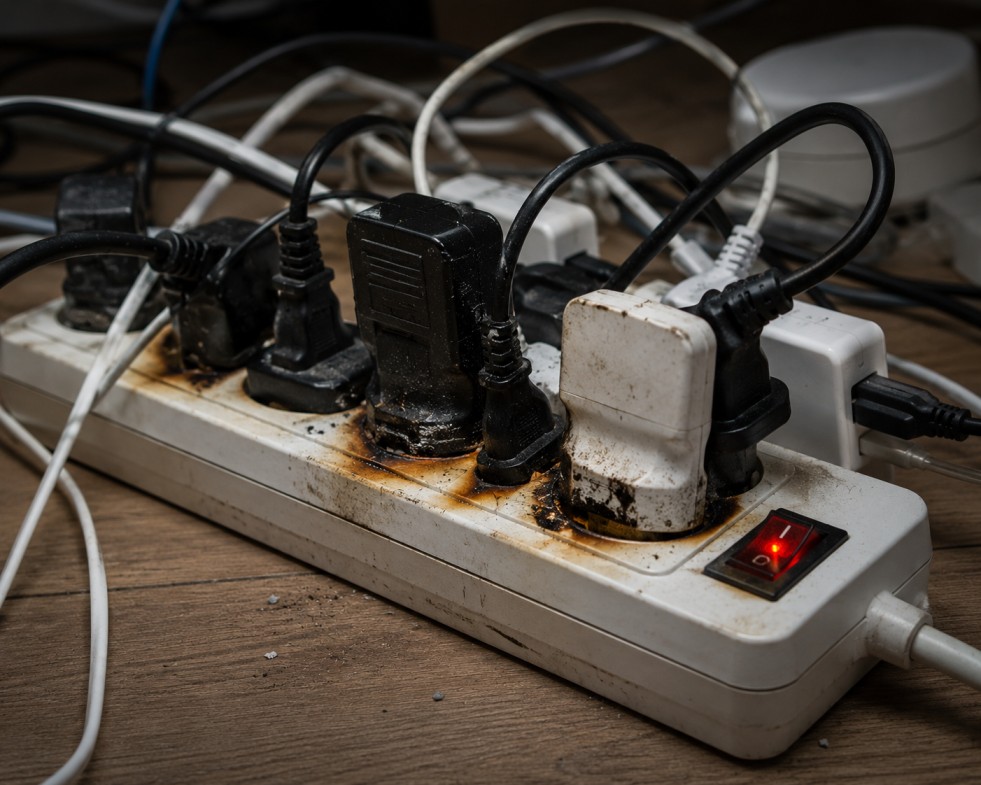
1. Don’t Overload Power Sockets and Extension Boards
Plugging too many appliances into a single socket or extension board is one of the most common electrical mistakes in Indian homes. Overloading generates excessive heat, which can melt insulation and start a fire. So, spread your appliances across multiple circuits and avoid using multi-plug adapters wherever possible.
2. Don’t Ignore Flickering Lights or Tripping Breakers
Flickering lights and frequently tripping circuit breakers are not minor nuisances — they are warning signs of a bigger electrical problem. These symptoms often indicate loose connections, overloaded circuits, or failing wiring. Therefore, call a licensed electrician as soon as you notice them. Do not put it off.
3. Don’t Handle Electrical Repairs Yourself Unless You Are Qualified
We understand that YouTube makes everything look easy. However, DIY electrical work is genuinely dangerous, and in India it is also illegal without proper certification. A wrong connection can cause electrocution, fire, or permanent damage to your home’s wiring. Always hire a licensed electrician for any repair or installation work.
4. Don’t Use Damaged Wires or Appliances
If a wire has a cut, crack, or exposed copper, replace it immediately. Similarly, if an appliance sparks, trips the breaker repeatedly, or smells like burning, stop using it. Because continuing to use damaged electrical equipment is one of the fastest ways to cause a home fire.
5. Don’t Place Electrical Items Near Water Sources
Keep all switches, sockets, and electrical appliances as far away from water sources as practical. This is especially important in kitchens and bathrooms. Moreover, always install splash-proof or IP-rated sockets in bathrooms and near kitchen sinks to add an extra layer of protection.
6. Don’t Leave Appliances on Standby for Long Periods
Many Indian households leave televisions, set-top boxes, and phone chargers plugged in 24/7. While this seems harmless, standby power still generates heat over time. So, switch off appliances at the socket when you are not using them, particularly before going to sleep or leaving the house.
Special Electrical Safety Tips for the Monsoon Season in India
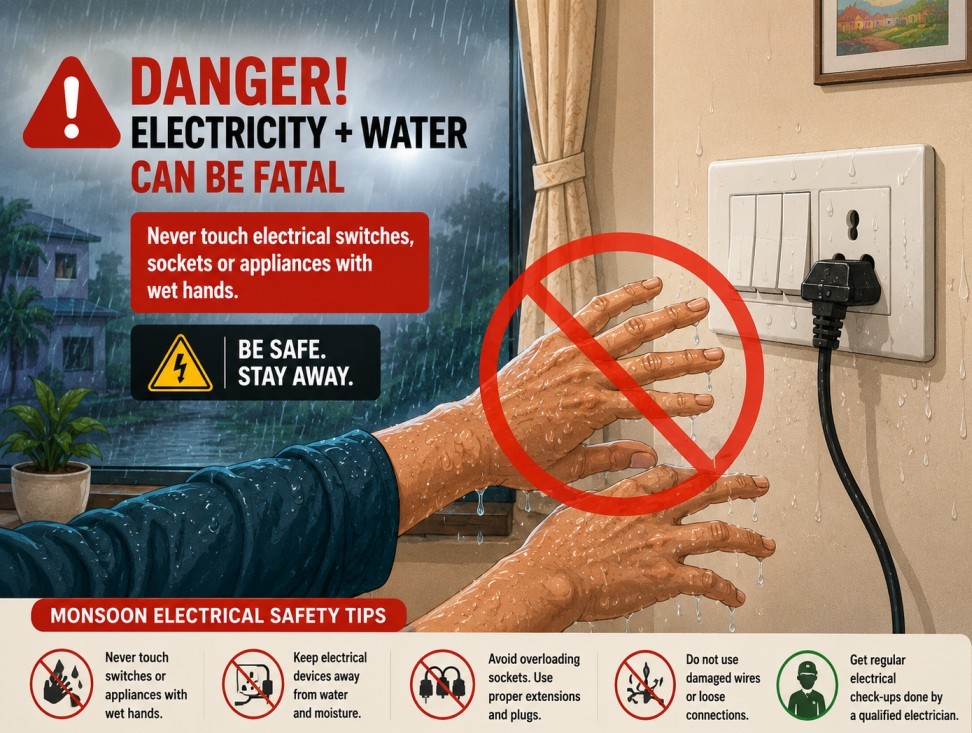
The monsoon season brings specific electrical risks that Indian homeowners need to prepare for. Here is what you should do before and during the rains:
- Check for water seepage near electrical points, junction boxes, or the distribution board. Even small leaks near wiring are a serious hazard.
- Never touch switches, sockets, or appliances with wet hands. This is the most basic rule, but it is also the most commonly ignored one.
- Keep a check on your earthing system before the monsoon starts. Soil moisture affects earthing resistance, and a licensed electrician can verify that your system is working correctly.
- If your area experiences frequent power cuts and surges during the monsoon, invest in a good voltage stabiliser for critical appliances.
- During heavy rain or flooding, switch off the mains supply as a precaution, especially if water is entering the home.
Electrical Safety Tips Specifically for Homes with Children
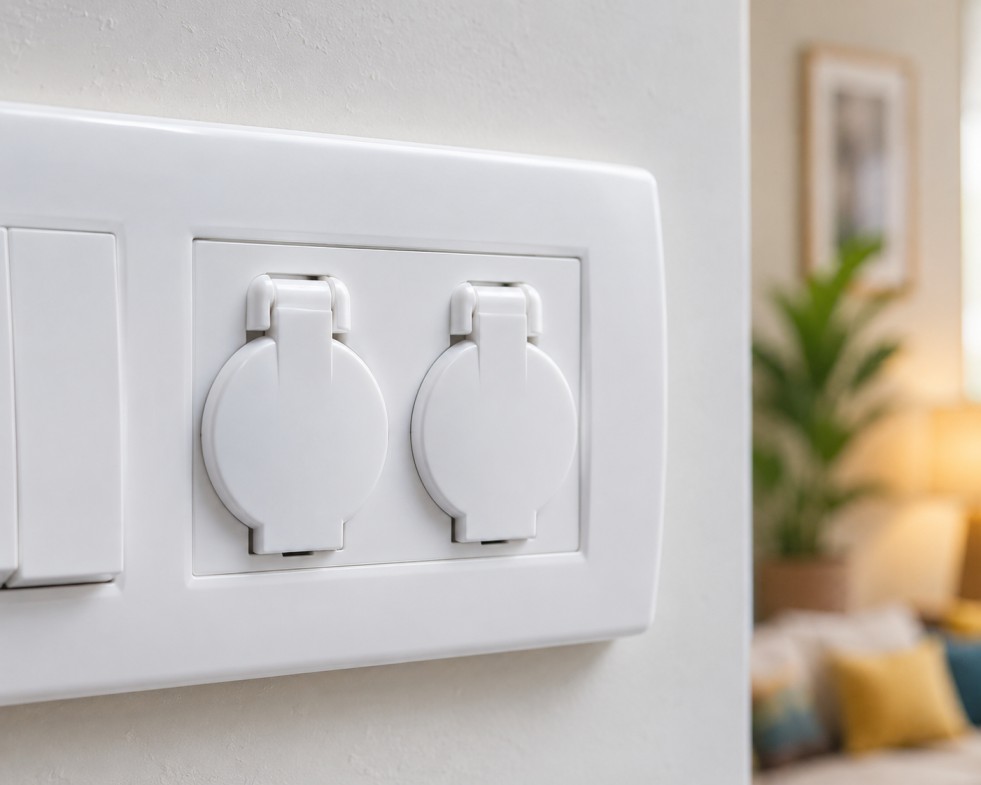
Children are naturally curious, which makes electrical hazards even more serious in a family home. So, if you have young kids, take these extra steps:
- Install child-proof socket covers on all accessible power points throughout the home.
- Use concealed wiring wherever possible so that wires are not accessible to children. Open wiring with visible cables invites curiosity and creates real risks.
- Keep extension cords off the floor and out of reach. Children tend to pull on cables, which can topple heavy appliances or cause shocks.
- Teach children from an early age that electrical points are not toys. Simple awareness goes a long way in preventing accidents.
How Maksideo Design Consultants Approaches Electrical Safety in Every Project
At Maksideo Design Consultants, electrical planning is never an afterthought. We work alongside certified electrical contractors right from the design stage to ensure that every home we work on meets current safety standards. This includes designing dedicated circuits for heavy appliances, specifying the right wire gauges, planning for proper earthing, and recommending the right MCB and RCCB configurations for each project.
Furthermore, we always recommend concealed wiring for new builds and full renovations because it is safer, cleaner, and better suited to modern Indian homes. Every switchboard position is carefully planned so that it is both functional and safe, especially in homes with children or elderly residents.
Because for us, good design is not just about how a home looks. It is about how safely and comfortably you can live in it every single day.
Final Thoughts
Electrical safety at home is not complicated. It mostly comes down to using the right products, respecting basic safety rules, and getting professional help when something seems off. Most electrical accidents in Indian homes happen not because the risks are invisible but because they are ignored.
So, take a walk through your home today. Check your distribution board, look at your wiring, and think about whether your sockets and switchboards are up to standard. If you are planning a renovation or a new home in Mumbai, our team at Maksideo Design Consultants is here to help you build a home that looks great and stays safe for years to come.