
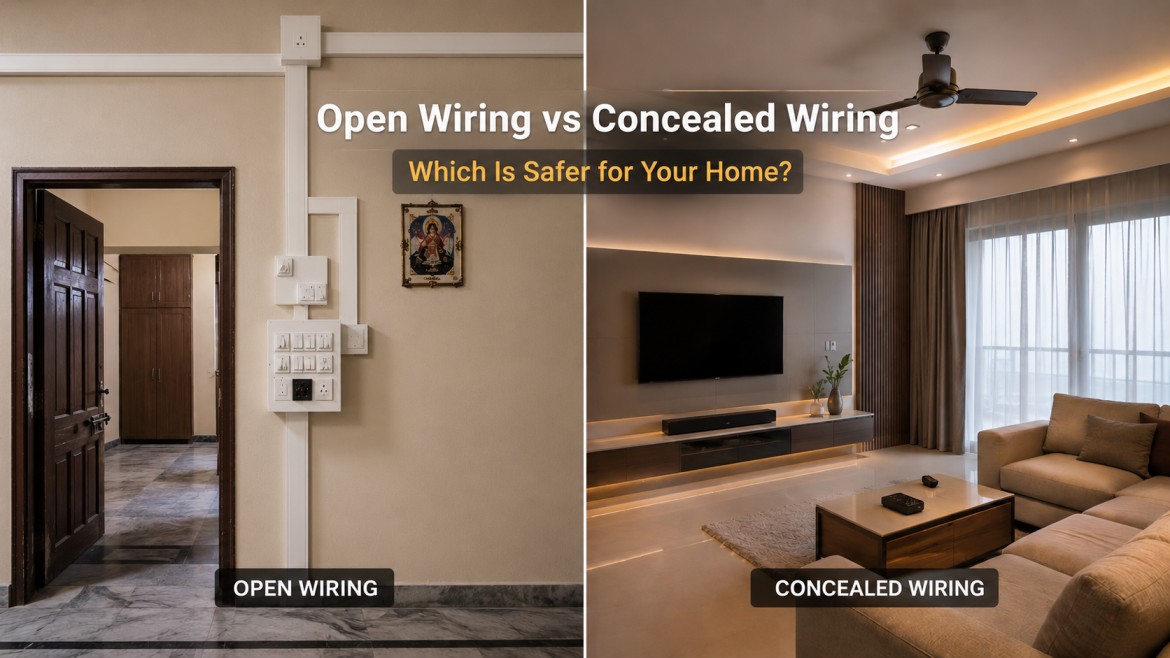
When you are building or renovating a home in India, electrical wiring is one of those decisions that most people leave entirely to their contractor. And honestly, that is where things can go wrong. The type of wiring you choose affects not just the safety of your home but also its aesthetics, long-term maintenance costs, and resale value.
So, should you go for concealed wiring in Indian homes or stick with the more traditional open wiring? At Maksideo Design Consultants, we have seen both systems up close across dozens of residential and commercial projects. In this guide, we break down the key differences so that you can make a confident, informed decision.
Outline
- What Is Concealed Wiring?
- What Is Open Wiring?
- Concealed Wiring vs Open Wiring: A Direct Comparison
- Which Type of Wiring Is Safer for Indian Homes?
- What Do Indian Electrical Standards Say?
- Which Should You Choose for Your Home?
- Tips from Maksideo Design Consultants
- Final Thoughts
What Is Concealed Wiring?
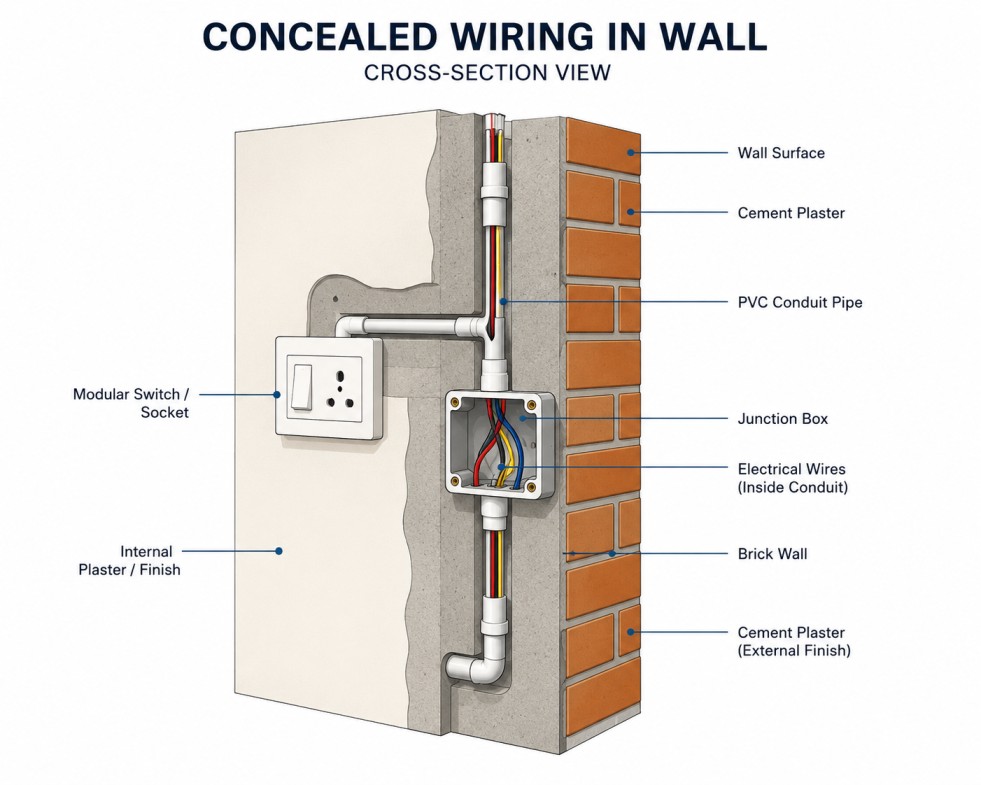
Concealed wiring, as the name suggests, runs inside the walls, ceilings, or floors of your home. Electricians chase grooves into the masonry, lay PVC conduit pipes inside, and then run the electrical wires through these conduits. After that, the grooves are plastered over, leaving no visible wiring on the surface.
Because everything is hidden, concealed wiring gives your home a clean, finished look. Moreover, it is the standard choice for modern homes, premium apartments, and professionally designed interiors across India today.
What Is Open Wiring?
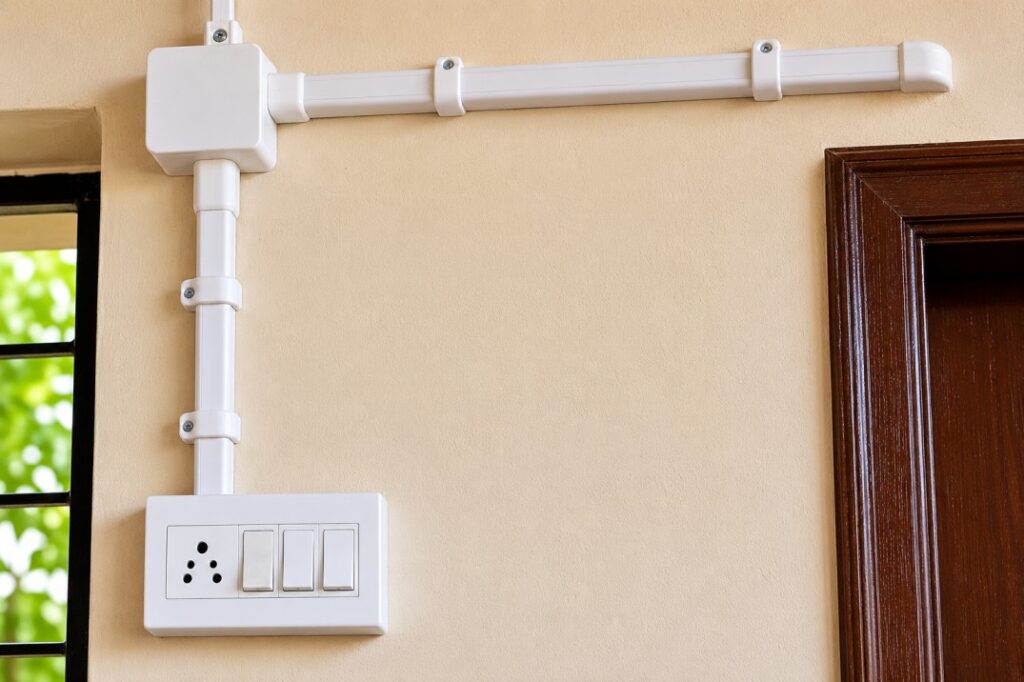
Open wiring, on the other hand, runs along the surface of walls and ceilings. The wires are placed inside PVC casing and capping strips, which are then fixed to the wall using clips or adhesive. Since the wires sit on top of the wall rather than inside it, the entire system stays accessible at all times.
Open wiring is commonly found in older Indian homes, industrial spaces, and budget constructions. However, it is also used in situations where concealed wiring is not feasible — such as in fully constructed buildings where re-wiring is required without breaking walls.
Concealed Wiring vs Open Wiring: A Direct Comparison
1. Safety
Safety is the most important factor when choosing between the two systems. Concealed wiring scores higher here for several reasons. Because the wires run inside conduit pipes within the wall, they stay protected from accidental damage, rodents, and moisture. In addition, the conduit acts as an insulating barrier, which reduces the risk of electrical fires caused by short circuits.

Open wiring, however, is more vulnerable. Since the cables are exposed on the surface, they can be accidentally cut, damaged by furniture, or chewed by rats — all of which are real risks in Indian homes. That said, good-quality PVC casing does offer basic protection, so the risk is not zero.
2. Aesthetics
If you care about how your home looks — and most homeowners do — concealed wiring wins hands down. There are no visible cables, no casing strips running across walls, and no cluttered surfaces. The result is a clean, seamless finish that works beautifully with modern interiors.
Open wiring, while functional, is difficult to hide. Even with well-fitted casing, it adds a utilitarian look to walls that can feel out of place in a well-designed home.
3. Installation Cost
Open wiring is significantly cheaper to install. Because it does not require wall chasing or plastering, both material and labour costs stay low. So, if you are working with a tight budget or doing a temporary installation, open wiring makes more practical sense.
Concealed wiring, in contrast, requires more time, skilled labour, and additional materials like conduit pipes and junction boxes. As a result, the upfront cost is higher — typically 20 to 40 percent more than open wiring, depending on the scale of the project.
4. Maintenance and Repairs
This is where open wiring has a clear advantage. Since the wires are accessible on the surface, identifying and fixing a fault is quick and straightforward. An electrician can trace the problem, replace a section of wire, and finish the job in a few hours.
With concealed wiring, however, locating a fault often means breaking open walls or using specialised detection equipment. Therefore, repairs can be more expensive and disruptive. That is why it is critical to use high-quality wires, proper conduits, and certified electricians during the initial installation of concealed wiring.
5. Durability
Concealed wiring generally lasts longer because the wires stay protected inside conduits and away from external damage. A well-executed concealed wiring system can last 25 to 30 years without major issues.
Open wiring, since it is exposed to the environment, tends to degrade faster. UV exposure, moisture, and physical wear reduce the lifespan of the casing and wires over time.
6. Flexibility for Future Changes
If you ever plan to renovate, add new electrical points, or upgrade your wiring, open wiring is easier to modify. You can simply extend the casing and add new wire runs without touching the walls.
With concealed wiring, adding new points requires either running fresh surface conduits — which defeats the aesthetic purpose — or chasing additional grooves into the wall. So, while concealed wiring looks better, it demands more careful planning upfront.
Which Type of Wiring Is Safer for Indian Homes?
When it comes to safety, concealed wiring in Indian homes is the better option — provided it is installed correctly. The conduit system protects wires from physical damage and moisture, both of which are common concerns in Indian climates. Furthermore, concealed wiring reduces the risk of accidental contact with live wires, which matters especially in homes with children.
That said, a poorly executed concealed wiring job is worse than a well-done open wiring installation. The quality of conduit material, wire gauge, earthing, and the skill of the electrician all play a huge role. So, never compromise on the quality of materials or the expertise of the person doing the work.
What Do Indian Electrical Standards Say?
The Bureau of Indian Standards (BIS) and the National Electrical Code of India (NEC India) both recommend the use of PVC conduit wiring for residential buildings. Concealed conduit wiring aligns with these guidelines and is the preferred method for new construction projects across the country.
Moreover, most reputable contractors and interior designers in India default to concealed wiring for new homes because it meets current safety codes and client expectations for finish quality.
Which Should You Choose for Your Home?
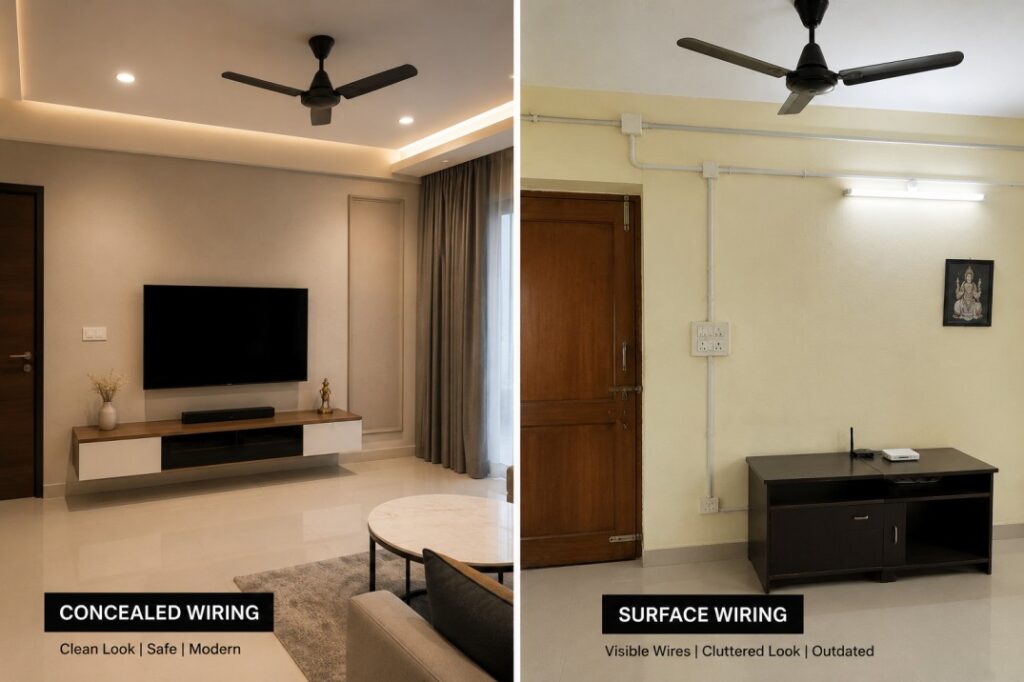
Here is a simple way to think about it:
- Choose concealed wiring if you are building a new home, doing a full renovation, or investing in a premium interior. It is safer, cleaner, and adds long-term value to your property.
- Choose open wiring if you are working with a very tight budget, doing a temporary setup, or re-wiring an already-constructed space where breaking walls is not practical.
- Consider a hybrid approach for older homes — use concealed wiring in areas that are being renovated and open wiring for sections where wall-breaking is not feasible.
Whatever you choose, always insist on ISI-marked wires, fire-resistant conduits, proper earthing, and a licensed electrician. These are non-negotiable, regardless of which wiring system you go with.
Tips from Maksideo Design Consultants
Having designed and overseen the electrical planning for numerous residential and commercial projects across Mumbai, here is what we consistently recommend to our clients:
- Plan your electrical layout before construction begins. Last-minute changes to concealed wiring are expensive and disruptive.
- Use 1.5 mm sq wires for lighting circuits and 2.5 mm sq wires for power sockets as a minimum standard.
- Always install a separate circuit for heavy appliances like air conditioners, geysers, and ovens.
- Opt for a modular switchboard system — it looks cleaner and is easier to upgrade later.
- Invest in a good MCB (Miniature Circuit Breaker) distribution board. It protects your home in case of overloads or short circuits.
Final Thoughts
Choosing between concealed and open wiring is not just a technical decision — it is a long-term investment in the safety and quality of your home. While open wiring has its place in budget and temporary setups, concealed wiring in Indian homes is clearly the better choice for modern residential spaces.
At Maksideo Design Consultants, we integrate electrical planning into our interior design process from day one. This ensures that your wiring is not just safe and code-compliant but also seamlessly designed around your space. If you are planning a new home, a renovation, or simply want expert advice on your home’s electrical layout, our team in Mumbai is here to help.