
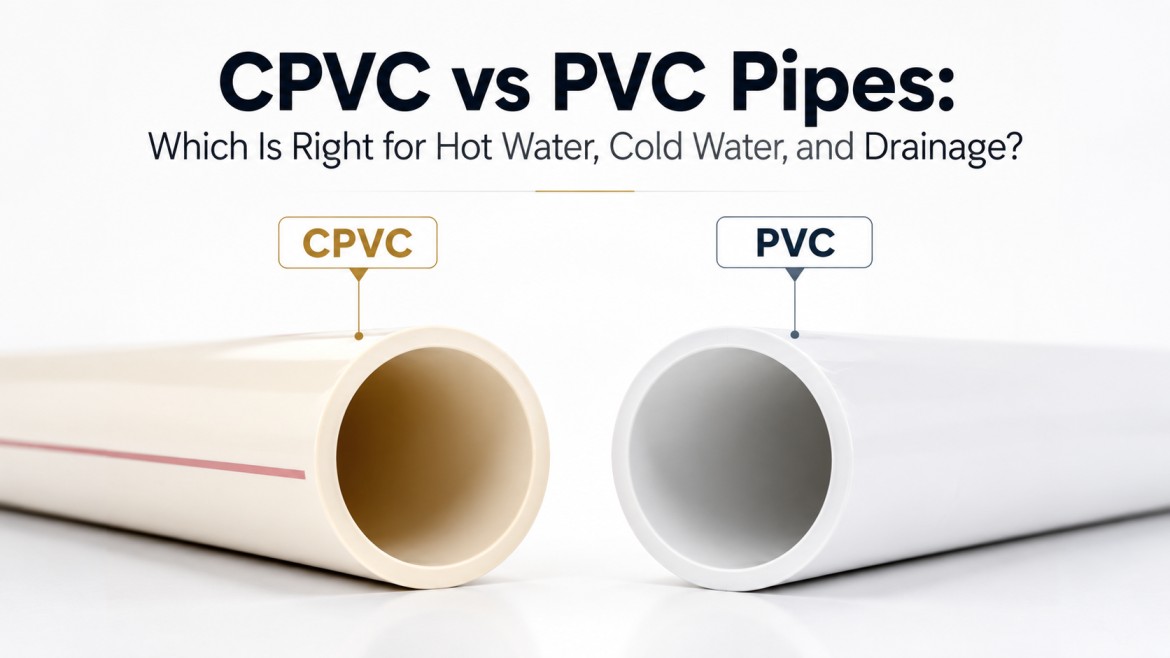
When you are building or renovating a home in India, plumbing decisions matter more than most people realise. Among the many choices you face, one of the most common questions is: should you use CPVC or PVC pipes? At first glance, both look similar — they are plastic pipes used for water supply and drainage. However, they serve very different purposes, and choosing the wrong one can lead to leaks, pipe damage, or even health hazards over time.
At Maksideo Design Consultants, we help homeowners navigate exactly these kinds of decisions during the construction and interior design process. So, in this guide, we break down the key differences between CPVC vs PVC pipes in India and explain which one is right for hot water, cold water, and drainage applications in your home.
Outline
- What Are CPVC and PVC Pipes?
- CPVC vs PVC Pipes India — A Quick Comparison
- Which Pipe Is Right for Hot Water Lines?
- Which Pipe Is Right for Cold Water Supply?
- Which Pipe Is Right for Drainage?
- Cost Difference Between CPVC and PVC Pipes in India
- Top CPVC and PVC Pipe Brands Available in India
- Quick Decision Guide: CPVC or PVC for Your Home?
- Final Thoughts
What Are CPVC and PVC Pipes?
Before we compare the two, it helps to understand what each pipe is made of and why those differences matter.
PVC — Polyvinyl Chloride
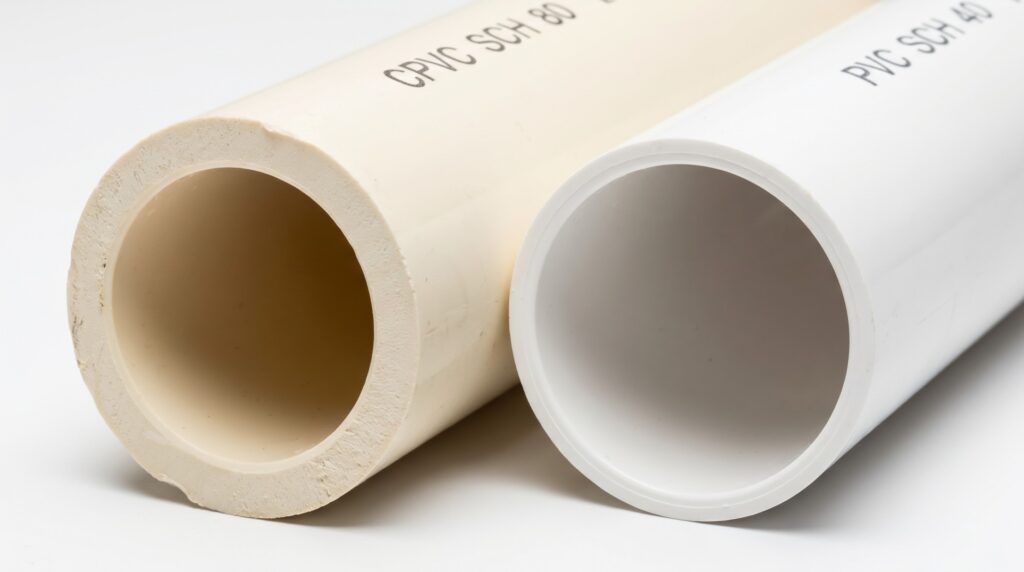
PVC pipes are made from standard polyvinyl chloride, one of the most widely used plastic materials in construction. They are rigid, lightweight, and cost-effective. You will find PVC pipes in most Indian homes for cold water supply lines and drainage systems. However, they have one critical limitation — they are not suitable for hot water. PVC softens and deforms at temperatures above 60°C, which makes it unsafe for hot water lines.
CPVC — Chlorinated Polyvinyl Chloride
CPVC pipes are made by adding extra chlorine to standard PVC through a chlorination process. This seemingly small change makes a significant difference. The added chlorine raises the pipe’s heat tolerance to up to 93°C — making CPVC fully suitable for hot water lines. Furthermore, CPVC offers better chemical resistance and is safe for potable (drinking) water at all temperatures.
So, while both pipes look similar on the outside, their internal chemistry is what sets them apart.
CPVC vs PVC Pipes India — A Quick Comparison
Here is a clear side-by-side comparison to help you understand the key differences at a glance:
| Feature | CPVC Pipe | PVC Pipe |
| Full Form | Chlorinated Polyvinyl Chloride | Polyvinyl Chloride |
| Heat Tolerance | Up to 93°C (200°F) | Up to 60°C (140°F) |
| Hot Water Use | ✅ Yes — ideal | ❌ Not recommended |
| Cold Water Use | ✅ Yes | ✅ Yes |
| Drainage Use | ✅ Can be used | ✅ Most common choice |
| Pressure Rating | Higher | Moderate |
| Cost | Higher (15–30% more) | Lower |
| Colour | Off-white / cream | White / grey / blue |
| Flexibility | Slightly flexible | Rigid |
| Chemical Resistance | Excellent | Good |
| BIS Standard | IS 15778 | IS 4985 / IS 13592 |
| Typical Use in India | Hot & cold water supply | Cold water supply & drainage |
Now that you have the overview, let us look at each use case in detail
Which Pipe Is Right for Hot Water Lines?
The answer here is clear — CPVC is the right choice for hot water lines in your home.
In India, hot water is used daily for bathing, kitchen sinks, and washing. Your geyser or water heater can push water at temperatures between 60°C and 80°C through the pipes. Standard PVC cannot handle this. At those temperatures, PVC pipes tend to:
- Soften and lose their shape over time
- Develop micro-cracks that lead to slow leaks inside walls
- Expand excessively, causing joints to loosen
- Release harmful compounds into the water supply
CPVC, on the other hand, handles these temperatures comfortably. Additionally, CPVC pipes meet the IS 15778 standard set by the Bureau of Indian Standards, which certifies them as safe for hot and cold potable water supply in Indian homes.
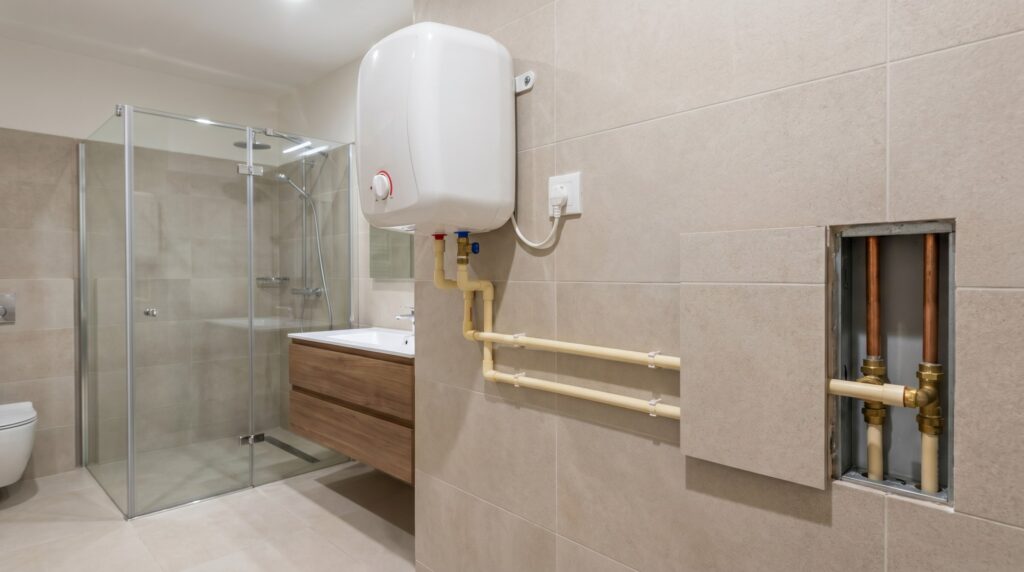
Therefore, if your home has a geyser, solar water heater, or instant water heater, the pipes connecting those appliances to your bathroom or kitchen fixtures must be CPVC — not PVC.
Which Pipe Is Right for Cold Water Supply?
Both CPVC and PVC are suitable for cold water supply lines. However, choosing between them for cold water comes down to cost and future flexibility.
Use PVC If:
- The cold water line will never carry hot water under any circumstances
- You are working with a tight construction budget
- Pipe runs are in easily accessible locations such as exposed plumbing shafts
Use CPVC If:
- You want a single consistent pipe material throughout the home for both hot and cold water lines
- Running cold water supply near hot water lines makes CPVC a safer choice to avoid installation errors
- Your cold water line is part of a pressurised supply system where higher pressure ratings are needed
Many professional plumbers in India prefer to use CPVC for both hot and cold water lines in new construction. This approach simplifies the installation, ensures consistent fittings are used throughout, and eliminates the risk of accidentally using a PVC pipe on a hot water line.
At Maksideo, when we coordinate the plumbing scope during a new home project, we generally recommend CPVC throughout the water supply network — it costs slightly more upfront, but it removes complexity and reduces long-term risk.
Which Pipe Is Right for Drainage?
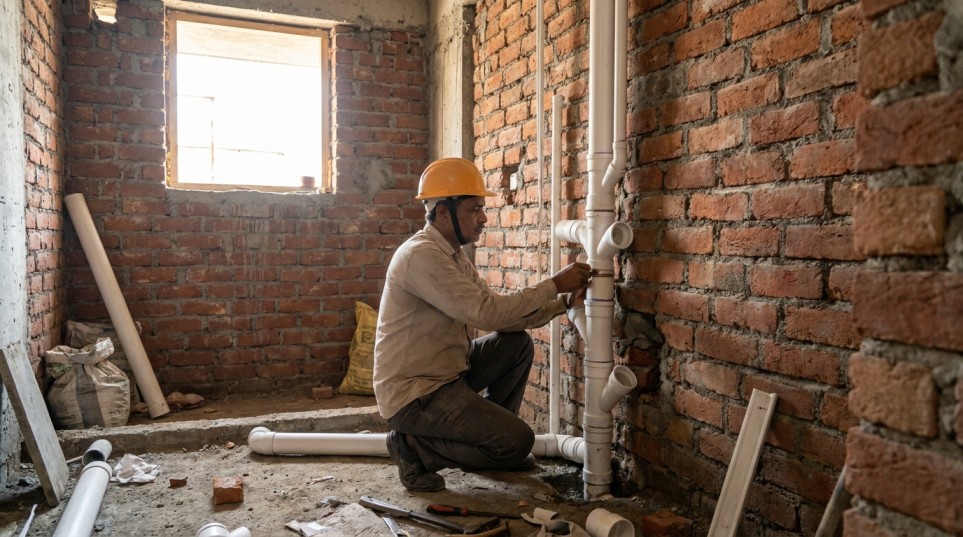
For drainage systems, PVC is the preferred and most widely used choice in India — and for good reason.
Drainage pipes do not carry pressurised water. Instead, they carry wastewater by gravity. Since drainage water is generally not at high temperatures (except occasional hot water from a kitchen sink), standard PVC works perfectly well for drainage applications.
Here is why PVC makes more sense than CPVC for drainage:
- Larger diameters (110mm, 160mm) are readily available in PVC, which drainage systems require
- Cost is significantly lower — and drainage lines tend to be much longer runs, so this matters
- The IS 13592 standard specifically certifies PVC SWR (Soil, Waste, and Rain) pipes for drainage use in Indian homes
- CPVC is not typically available in the large diameters needed for main drainage lines
However, it is worth noting that the short outlet pipe from a kitchen sink or wash basin to the wall drainage point can sometimes be CPVC — especially if the outlet carries occasional hot water from dishwashing. For the main drainage stack and underground drainage, always use PVC SWR pipes.
Cost Difference Between CPVC and PVC Pipes in India
Cost is often the deciding factor for many homeowners in India. Here is a realistic breakdown to help you plan your plumbing budget:
- PVC pipes (cold water, IS 4985): Approximately ₹25–₹60 per metre depending on diameter and pressure class
- CPVC pipes (hot and cold water, IS 15778): Approximately ₹60–₹150 per metre depending on diameter and brand
- PVC SWR pipes (drainage, IS 13592): Approximately ₹40–₹90 per metre
On average, CPVC pipes cost about 15–30% more than equivalent PVC pipes. For a standard 2BHK or 3BHK apartment in Mumbai or Thane, the total additional cost of upgrading from PVC to CPVC for all water supply lines is typically between ₹8,000 and ₹20,000 — a relatively small amount in the context of a full construction or renovation budget.
Given that plumbing is a hidden, long-term investment that is very difficult and expensive to redo later, spending a little more on CPVC for your hot and cold water lines is almost always worth it.
Top CPVC and PVC Pipe Brands Available in India
When you buy pipes for your home in India, always choose ISI-marked products from reputed manufacturers. Here are some of the most trusted brands:
CPVC Pipe Brands
- Astral CPVC Pro (one of the most popular choices for residential projects)
- Supreme CPVC pipes
- Finolex CPVC pipes
- Prince CPVC pipes
PVC Pipe Brands
- Ashirvad PVC pipes
- Wavin India (now Astral) — SWR drainage pipes
- Prince Pipes PVC range
- Supreme PVC pipes
Always ask your plumber or contractor to show you the ISI mark and manufacturer details on the pipe before installation. Counterfeit or low-quality pipes look identical to genuine ones but fail quickly — especially under hot water pressure.
Quick Decision Guide: CPVC or PVC for Your Home?
Still unsure which pipe to use where? Here is a simple rule to follow:
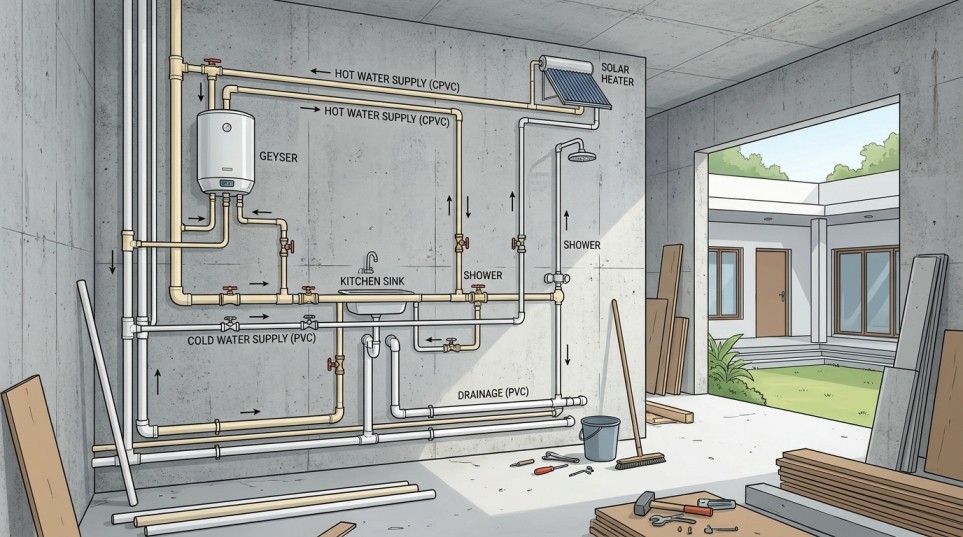
- Hot water supply lines (from geyser to bathroom/kitchen) → Always CPVC
- Cold water supply lines → CPVC preferred; PVC acceptable for budget projects
- Drainage and wastewater lines → PVC SWR
- Underground plumbing → PVC (heavy duty class)
- Outdoor water supply (terrace, garden) → PVC (if cold water only)
When in doubt, talk to your interior designer, architect, or plumbing consultant before the plumber starts laying pipes. Once the pipes are inside the walls, changing them is expensive and disruptive.
Final Thoughts
Choosing between CPVC and PVC pipes is not complicated once you understand their core difference. CPVC handles heat — PVC does not. Any line that carries hot water in your home needs CPVC, without exception. Cold water supply works with either, but CPVC gives you peace of mind. When it comes to drainage, PVC SWR remains the practical and cost-effective choice.
At Maksideo Design Consultants, we believe that great homes are built on thoughtful decisions — from the materials hidden inside the walls to the finishes you see every day. Whether you are building a new home in Thane, renovating an apartment in Andheri, or planning a luxury residence across the MMR region, getting your plumbing right from the start saves you from headaches and costs down the line.
Have questions about material choices for your upcoming project? Our team is here to help.