The layout of an office plays a key role in shaping how people work, communicate, and stay productive. It influences the overall atmosphere, comfort levels, and even the speed at which tasks get done. Two popular approaches in workplace design are open and closed office layouts. Each comes with its own set of advantages and challenges, which can affect employee focus, collaboration, privacy, and use of space. Understanding the comparison between Open vs. Closed Office Layouts helps in making smarter design choices that support both team performance and business goals.
Choosing the right one depends on many practical factors such as the nature of work, size of the team, company culture, and need for flexibility. A smart layout supports workflow, reduces distractions, and helps create a balanced environment. Understanding the differences between these two styles is essential when considering Open vs. Closed Office Layouts, as it helps in making better design choices that support both individual performance and team goals.
In this blog, we’ll dive into the pros and cons of both open and closed office layouts. By the end of this post, you’ll have a better understanding of which layout is best suited for your business, taking into account factors like productivity, employee well-being, collaboration, and cost-effectiveness.
Outline
- What Are Open and Closed Office Layouts?
- Defining Open Office Layouts
- Defining Closed Office Layouts
- Pros and Cons of Open Office Layouts
- Pros of Open Layouts
- Cons of Open Layouts
- Pros and Cons of Closed Office Layouts
- Pros of Closed Layouts
- Cons of Closed Layouts
- Which Layout Promotes Productivity and Employee Well-Being?
- How Open Layouts Impact Productivity
- How Closed Layouts Impact Productivity
- Collaboration: Open vs. Closed Layouts
- Encouraging Collaboration in Open Layouts
- Encouraging Collaboration in Closed Layouts
- Cost-Effectiveness: Open vs. Closed Layouts
- Open Layouts and Their Cost Benefits
- Closed Layouts and Their Investment Needs
- Which Layout Works Best for Your Workplace?
- Factors to Consider Before Choosing a Layout
- Conclusion: The Right Layout for Your Office
1. What Are Open and Closed Office Layouts?
Defining Open Office Layouts
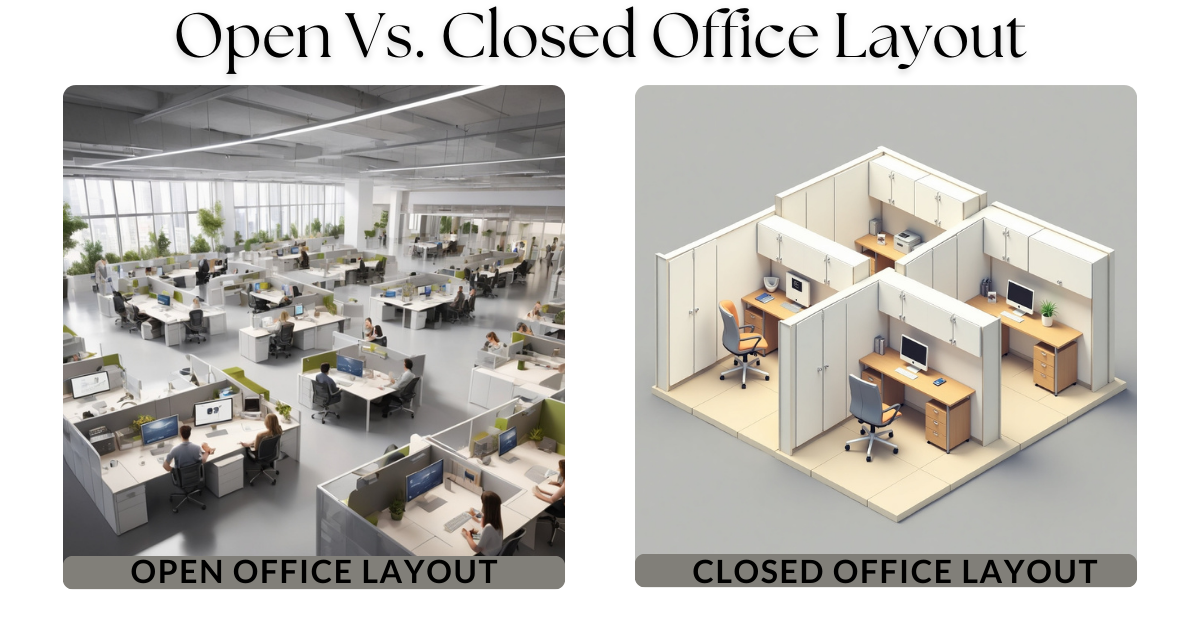
An open office layout is a workspace with minimal internal walls, where employees work in a shared environment without assigned cubicles or enclosed rooms. The space usually features long desks, shared tables, or large workstations that can accommodate multiple people. This setup encourages movement, easy interaction, and regular face-to-face communication. The absence of physical barriers helps team members stay connected, making it easier to exchange ideas, ask quick questions, and support one another in real time.
Many companies choose this design to build a collaborative and transparent culture. It supports teamwork by allowing people from different departments or roles to interact more frequently. This open environment can help boost creativity, especially during group tasks or brainstorming sessions. The layout also makes it easier to monitor activity, promote teamwork, and keep everyone informed.

While the design is visually modern and promotes group dynamics, the success of an open office depends on how well it aligns with the team’s work style. Tasks that need constant collaboration may benefit from such a setup, while jobs requiring concentration might face challenges without dedicated quiet zones. Thoughtful furniture arrangements, noise control measures, and defined zones for specific activities can help improve the overall experience in an open office.
Defining Closed Office Layouts
A closed office layout features individual rooms or cubicles separated by walls or partitions, giving each employee a dedicated and secluded workspace. This setup offers a clear sense of personal space, which supports focused work, reduces interruptions, and allows more control over the immediate environment. The layout is designed for privacy, making it suitable for tasks that require deep concentration or involve sensitive information.
In this type of office, employees experience fewer distractions from noise or movement. This helps improve attention and accuracy, especially during tasks that need careful analysis or decision-making. The structured layout also brings a sense of order and formality to the space, which can contribute to better time management and individual accountability.
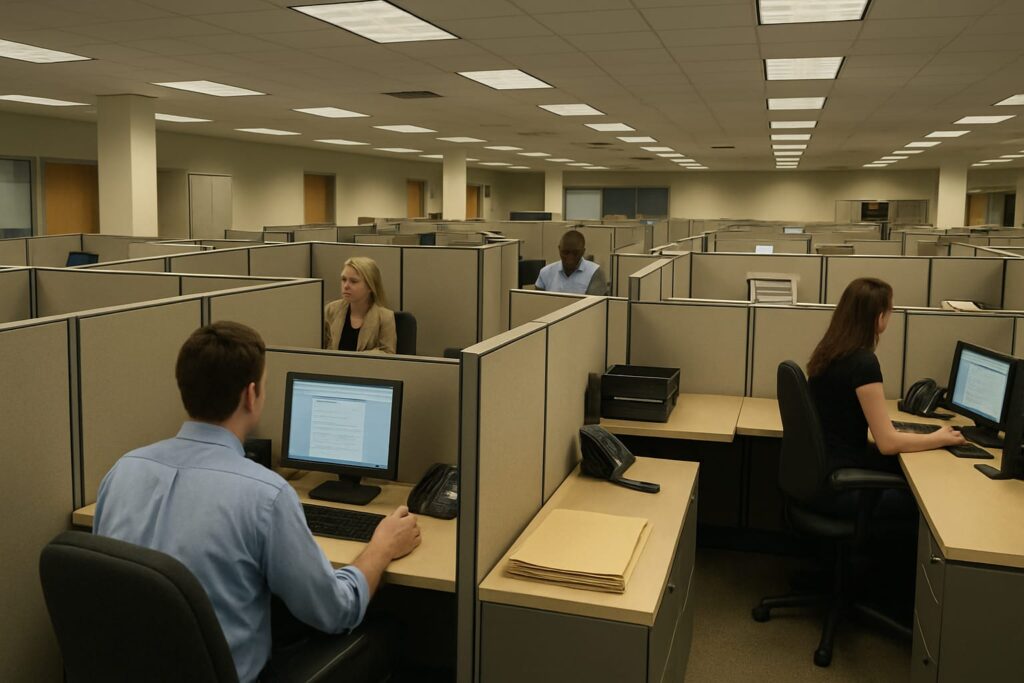
Since people work in their own zones, informal conversations may occur less often, and spontaneous collaboration might reduce. However, the setup encourages employees to manage their work independently, leading to a stronger sense of ownership and responsibility. Closed office designs are well-suited for industries where precision and confidentiality are key, such as law firms, financial institutions, and research-based organizations. Proper planning, clear pathways, and effective use of space help make this layout both practical and professional.
2. Pros and Cons of Open Office Layouts
Pros of Open Layouts
- Encourages Collaboration: Open layouts support frequent interaction among employees. With no physical barriers, team members can easily share ideas, give feedback, and work together on tasks, which strengthens teamwork and improves productivity.
- Saves Space: This layout allows more workstations to fit into the same area. It is ideal for growing teams or offices with limited space, helping to use every square foot more efficiently.
- Boosts Creativity: The open and flexible environment helps employees feel more relaxed and engaged. Seeing others work or brainstorm nearby can inspire new ideas and lead to creative solutions.
- Improved Transparency: With open visibility across the workspace, communication becomes more direct. Managers and staff can interact more freely, which helps build trust and keeps everyone aligned with company goals.
- Cost-Effective: Open office designs require fewer walls, doors, and partitions. This leads to lower construction costs, faster setup, and less spending on materials and ongoing maintenance.
Cons of Open Layouts
- Lack of Privacy: Open office designs often make it difficult for employees to have private moments or conversations. Without enclosed spaces, individuals may feel constantly observed, which can cause discomfort and reduce their ability to speak freely or focus on sensitive tasks.
- Noise and Distractions:Shared work areas usually come with background sounds like phone calls, conversations, and office equipment. These noises can interrupt concentration and slow down work that requires mental effort and attention to detail.
- Increased Interruptions: Easy access to colleagues can lead to ongoing disruptions. Unplanned chats, sudden questions, and casual drop-ins can make it hard to stay focused, especially during tasks that need consistency and flow.
- Lack of Personalization: In an open office, it can be challenging for employees to personalize their workspace. With shared desks or minimal boundaries, individuals may feel less ownership over their area, which can impact morale.
3. Pros and Cons of Closed Office Layouts
Pros of Closed Layouts
- Focus and privacy: A closed office layout helps employees concentrate better by reducing external disturbances. With physical barriers like walls or doors, workers are less affected by nearby conversations, movement, or phone calls. This quiet setting is ideal for tasks that demand full attention, deep thinking, or long periods of uninterrupted work. The sense of privacy also makes employees feel more secure and respected in their environment.
- Noise control: Closed offices naturally block out much of the background noise common in shared spaces. This creates a calm and controlled atmosphere where people can work without being distracted by surrounding activity. In roles that involve detailed analysis, critical decisions, or high-pressure tasks, a quiet workspace helps reduce errors and mental fatigue.
- Personalization : Employees in closed setups often have dedicated desks or rooms, giving them the chance to organize and decorate their area to suit their needs. This flexibility allows for more comfort, which can lead to better job satisfaction. Having control over one’s environment can also support better routines and reduce stress during the workday.
- confidentiality: Closed layouts support secure communication. Private conversations, sensitive files, and client information stay better protected when meetings or calls happen behind closed doors. This makes the layout especially suitable for professions that handle private data or legal matters, such as healthcare, law, finance, and senior management roles.
Cons of Closed Layouts
- Limited teamwork: Closed office layouts often reduce the chances of spontaneous conversation and casual idea sharing. When employees are separated by walls or partitions, communication tends to become more formal and less frequent. This can slow down problem-solving, reduce teamwork, and make it harder for creative ideas to emerge naturally. In fast-paced environments, this lack of instant collaboration can affect the overall speed of execution.
- Space inefficiency: Enclosed offices require more space per person. Each private area takes up additional square footage, which limits how many people the office can hold. In high-rent locations or compact buildings, this can lead to significantly higher costs for rent, utilities, and daily operations. Companies may also face challenges when trying to expand or rearrange departments due to fixed room structures.
- Isolation: Working in a separate room can make employees feel disconnected from their team. While some may appreciate the quiet, others may struggle with the lack of social interaction. This isolation can affect morale, reduce motivation, and weaken the sense of unity within the workplace. New team members might find it harder to connect with colleagues or understand company culture when daily interactions are limited.
- Extra expense: Creating private offices involves more materials and labor. From constructing individual walls and installing doors to setting up separate lighting and ventilation systems, the initial investment is high. Long-term maintenance is also more complex. Adjustments for new hires, equipment upgrades, or layout changes require extra time and resources, which adds to the overall expense.
4. Which Layout Promotes Productivity and Employee Well-Being?
How Open Layouts Impact Productivity
Open office layouts support quick communication, making them useful for group tasks, team discussions, and creative planning. Employees can share ideas easily and keep projects moving without waiting for formal meetings. This open setting often brings energy to the workplace and encourages a sense of teamwork.
However, frequent noise, movement, and conversations can interrupt focus. Tasks that require deep thinking may suffer in such environments. Employees who enjoy collaboration often do well in open layouts, while those who prefer quiet and independence may feel distracted or mentally tired.
To improve productivity, some offices include quiet zones or meeting areas. This helps balance the need for teamwork with the need for concentration, allowing employees to choose the space that best suits their work.
How Closed Layouts Impact Productivity
Closed office layouts create a quiet, focused environment that supports deep work. With fewer distractions from noise or movement, employees can concentrate better and complete complex tasks with greater accuracy. Privacy helps individuals manage their time and workload more effectively, especially in roles that involve detailed planning or sensitive information.
This setup is ideal for professionals who need uninterrupted focus. It also allows for private conversations and careful decision-making. However, limited interaction between coworkers can slow down communication. When quick discussions are replaced by scheduled meetings, teamwork may lose its pace.
To improve efficiency, many offices combine private rooms with open areas. This flexible approach lets employees move between quiet zones and collaborative spaces depending on their task, creating a balance between focus and teamwork.
5. Collaboration: Open vs. Closed Layouts
Encouraging Collaboration in Open Layouts
Open office layouts naturally support quick communication and team interaction. The close arrangement of desks makes it easy for employees to ask questions, share feedback, and exchange ideas without delay. This environment often leads to spontaneous conversations that can spark innovation or solve problems faster. Group activities like brainstorming sessions or informal team huddles happen more freely, which helps teams stay connected and engaged. The open space also reduces the need for formal meetings, allowing ideas to flow more naturally throughout the day.
Encouraging Collaboration in Closed Layouts
In closed layouts, promoting collaboration requires more planning. Since employees work in separate rooms or cubicles, they may need to step away from their desks or plan meetings to connect with others. To support teamwork in this setting, it helps to design shared areas such as meeting rooms, breakout zones, or lounges where people can gather comfortably. These spaces provide the chance to work together without disturbing others. Regular check-ins and clear communication channels also help ensure that team members stay aligned while still enjoying the benefits of a quiet and private workspace.
6. Cost-Effectiveness: Open vs. Closed Layouts
Open Layouts and Their Cost Benefits
Open office layouts are often more affordable to build and maintain. Since they involve fewer walls, doors, and individual rooms, the need for construction materials and labor is lower. This makes the overall setup quicker and less expensive. Open spaces also allow more flexibility in planning the layout, which helps in using available space more efficiently. A larger number of employees can be placed in a smaller area without feeling crowded, making this design practical for growing teams or businesses with limited square footage. Lower energy use for lighting and ventilation in a shared space can further reduce long-term costs. When comparing Open vs. Closed Office Layouts, these cost advantages make the open layout a strong choice for companies focused on budget and space optimization.
Closed Layouts and Their Investment Needs
Closed office designs usually involve higher costs during the initial setup. Each private space requires walls, doors, and often customized electrical and HVAC systems. These features add to both the construction time and overall budget. Ongoing maintenance, such as repairs or layout changes, can also be more complex and expensive. Despite the added cost, closed layouts provide a clear advantage in work environments where focus, privacy, and security are essential. For companies that handle confidential tasks or require quiet work zones, this design may deliver greater long-term value by supporting accuracy, comfort, and job performance. When evaluating Open vs. Closed Office Layouts, it becomes important to weigh these upfront investments against the long-term benefits of improved productivity and workplace efficiency.
7. Which Layout Works Best for Your Workplace?
Choosing the right office layout depends on the specific needs and goals of your business. If your work environment thrives on collaboration, frequent interaction, and creative thinking, an open layout may support your team more effectively. The open space can help build strong communication habits, encourage teamwork, and create a modern, energetic atmosphere that keeps ideas moving.
On the other hand, if your work requires deep focus, privacy, or involves sensitive information, a closed layout may be a better choice. Employees who need a calm setting with fewer interruptions often perform better in enclosed spaces where they can manage their time and workload more independently. When exploring Open vs. Closed Office Layouts, it’s important to assess which setup best supports your team’s daily tasks and long-term goals.
It’s also important to consider your company’s culture, the structure of your teams, and how your employees prefer to work. Some teams benefit from direct contact throughout the day, while others need quiet to meet deadlines and handle complex tasks.
A flexible layout that combines shared areas with private rooms can often meet a wider range of needs. This hybrid approach gives employees the choice to collaborate when needed and retreat to a quiet space for focused work. By aligning the office design with your team’s working style, you can create a space that supports both productivity and employee satisfaction.
8. Conclusion: The Right Layout for Your Office
Choosing the right office layout depends on the specific needs and goals of your business. If your work environment thrives on collaboration, frequent interaction, and creative thinking, an open layout may support your team more effectively. The open space can help build strong communication habits, encourage teamwork, and create a modern, energetic atmosphere that keeps ideas moving. When comparing Open vs. Closed Office Layouts, it becomes clear that the best choice depends on how well the design matches your team’s working style and objectives.
On the other hand, if your work requires deep focus, privacy, or involves sensitive information, a closed layout may be a better choice. Employees who need a calm setting with fewer interruptions often perform better in enclosed spaces where they can manage their time and workload more independently.
It’s also important to consider your company’s culture, the structure of your teams, and how your employees prefer to work. Some teams benefit from direct contact throughout the day, while others need quiet to meet deadlines and handle complex tasks.
A flexible layout that combines shared areas with private rooms can often meet a wider range of needs. This hybrid approach gives employees the choice to collaborate when needed and retreat to a quiet space for focused work. By aligning the office design with your team’s working style, you can create a space that supports both productivity and employee satisfaction.